Search icon
Adventure

Written by: The Va Beau Team July 6, 2026

Morocco the kingdom that gets under your skin

Jemaa el-Fna at dusk - image credit - gabrielle-elleirbag placeholder

Morocco does something to people. You arrive planning a week and leave already thinking about when you can come back. The colors are at a saturation your camera can never quite capture. The light is doing something extraordinary to the pale stone walls. The smell of cumin and charcoal and orange blossom arrives before you’ve even left the airport. You step into the medina and the city swallows you whole and something in your nervous system — the part that has been on high alert for the last several months of modern life — starts, very slowly, to release.

This is not an accident. Morocco has been receiving travelers for centuries and has gotten very good at it. It knows exactly what it is and has no particular interest in being anything else. That confidence is half the seduction.

Marrakech

placeholder

he medina, Marrakech

There is a moment on the first morning in Marrakech — and it comes for everyone, though at different hours — when you stop trying to process what’s happening and simply let it happen. The call to prayer at dawn, the sound of the city coming awake, the smell of bread baking somewhere and charcoal starting somewhere else. The light at seven in the morning hits the pink walls of the medina and does something with them that no photograph has ever adequately captured.

Marrakech is overwhelming by design. The medina is still a functioning city — bread baked in communal ovens, craftsmen working in the same lanes their grandfathers worked, a density of life that makes the best European neighborhoods feel spacious and underwritten. Jemaa el-Fna, the main square, transforms completely between morning and night: fruit juice vendors and Quranic scribes by day, then as the sun drops, smoke from dozens of food stalls, acrobats and storytellers and musicians, the whole square becoming something between a carnival and a marketplace that has been operating in exactly this way for five centuries.

The Koutoubia Mosque, the oldest and largest in Marrakech, rises above the square with its 77-meter minaret — the model for both the Giralda in Seville and the Hassan Tower in Rabat, which tells you everything about the reach of Moroccan architecture into medieval Spain. Walk toward it in the early evening when the swallows are circling the tower and the calls to prayer are overlapping from different directions across the city.

Where to Sleep

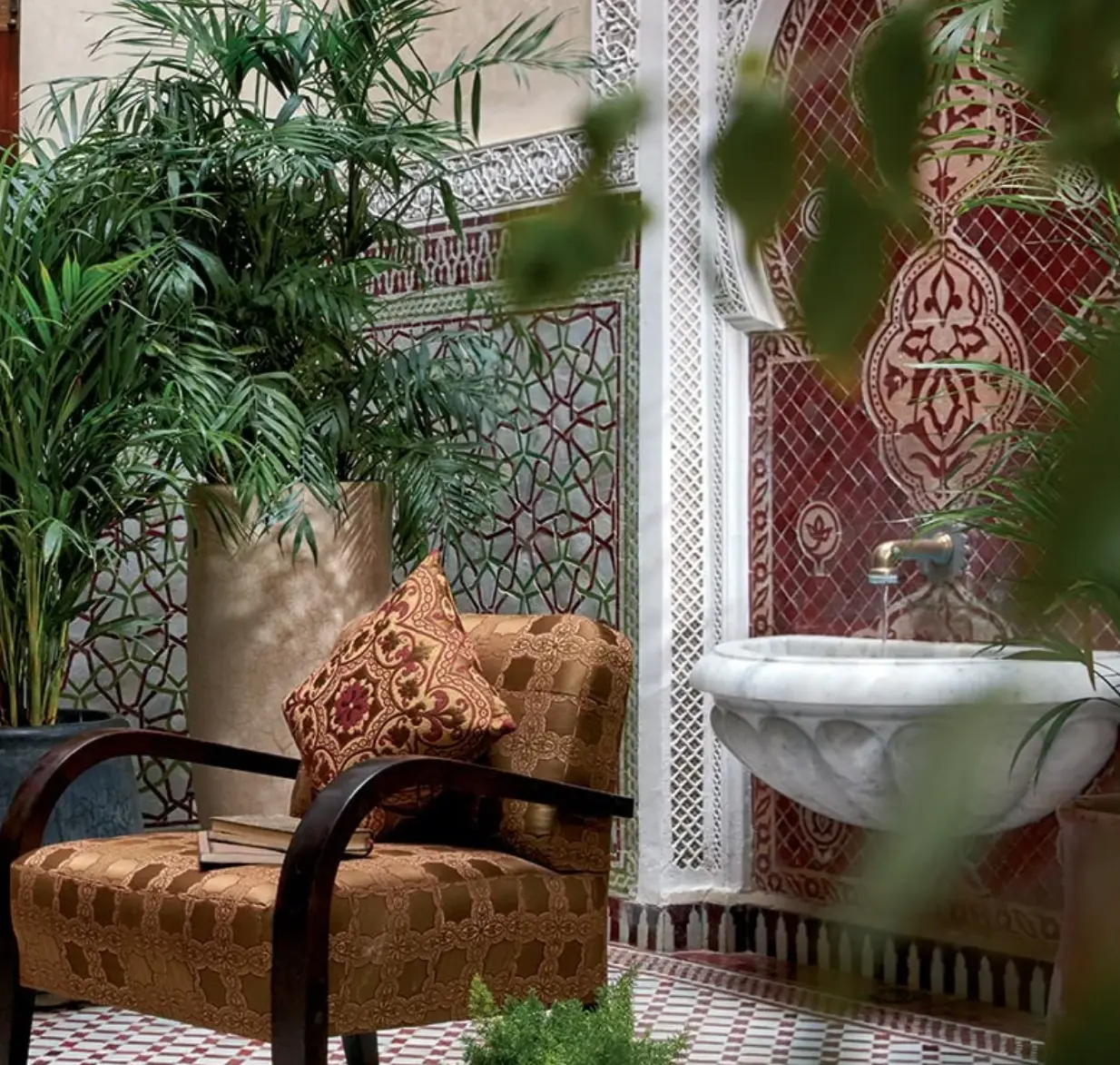
To stay in a riad is to understand something essential about Moroccan civilization: the belief that beauty belongs inside, hidden from the street, disclosed only to those who enter. The exterior of a Marrakech riad tells you nothing. The door opens and suddenly there is a courtyard of orange trees, zellij tiles, the sound of a fountain, carved stucco on every surface. The city falls away.

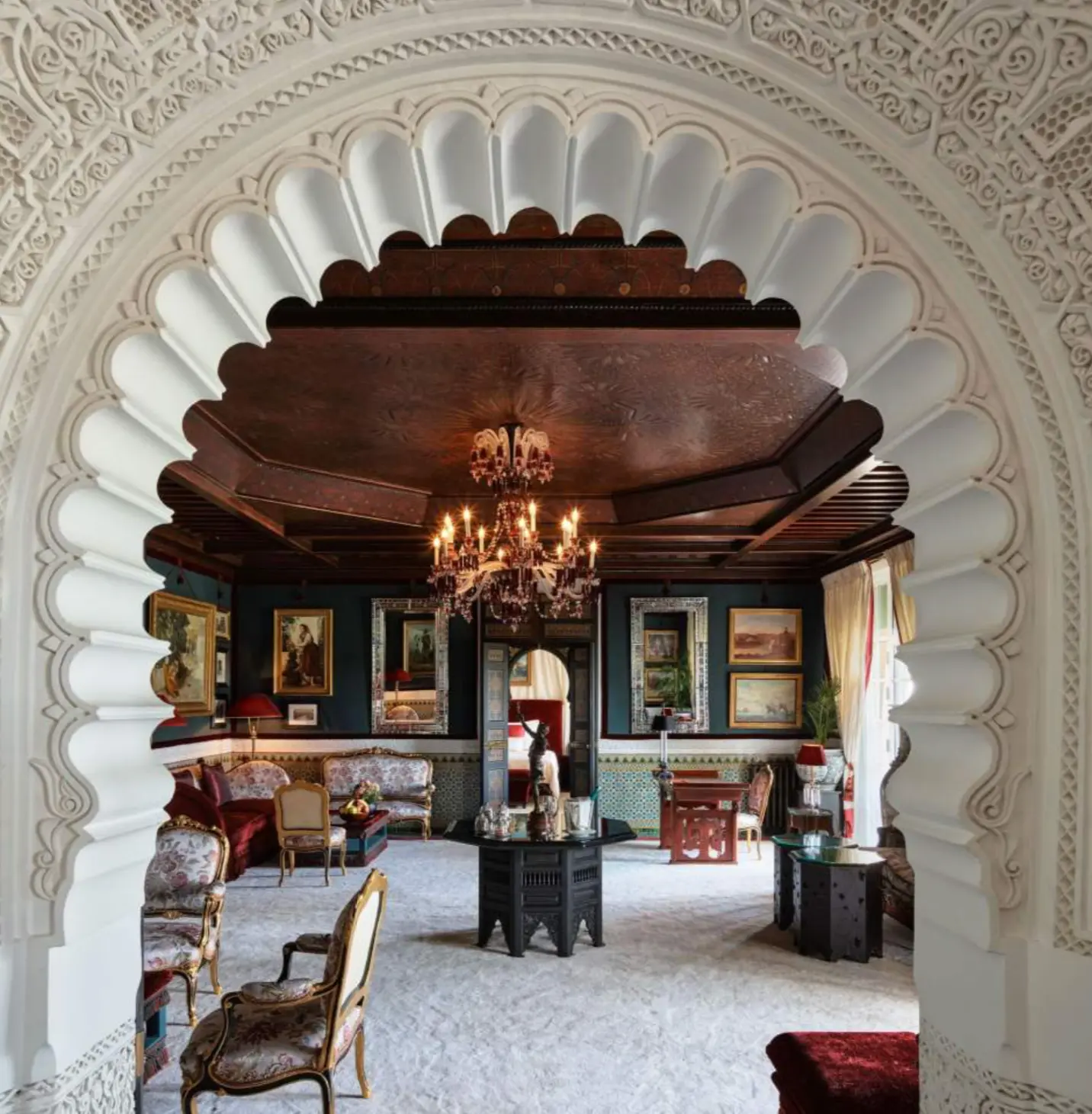
Royal Mansour, commissioned by King Mohammed VI and opened in 2010, is the absolute pinnacle — three-story private riads connected by underground passages, with the Royal Palace’s own craftsmen executing the decoration. It is not a hotel so much as a private city within the city. The level of craft is simply without equal anywhere.

La Mamounia, which has been receiving guests since 1923 and has been restored several times without losing its essential character, is the historic landmark. Winston Churchill painted here. The gardens are extraordinary. The sense of occasion from the moment you arrive is irreplaceable.

El Fenn, in the medina, is the boutique choice — contemporary art, color, rooftop with views over the city, exactly the right size for a place that wants to feel personal.

Where to Eat

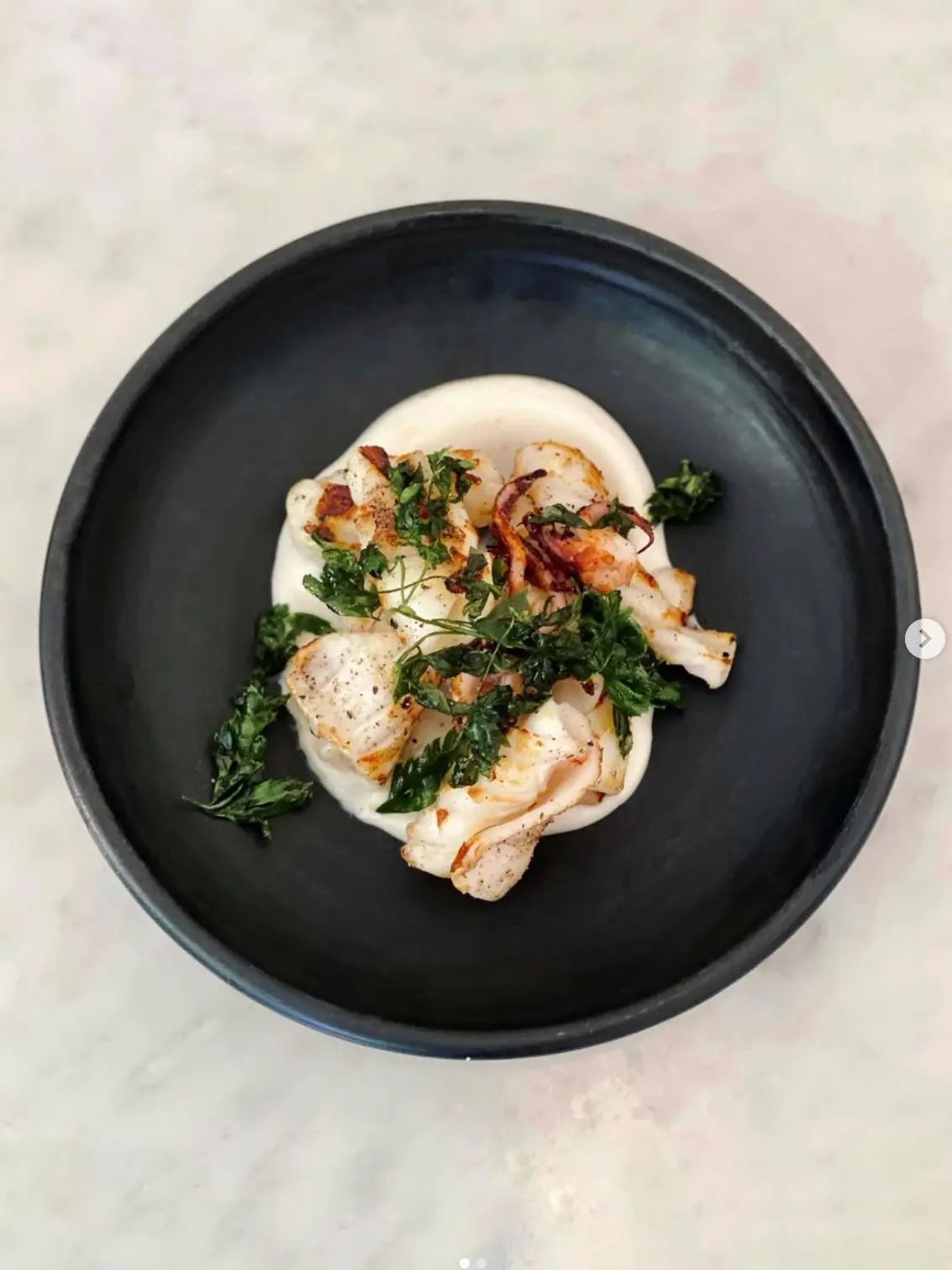
Courtesy of plus 61 Gueliz
placeholder

above the spice square

Nobody goes to Marrakech expecting their best meal to be at an Australian restaurant. And yet.

+61, named for Australia’s international calling code, is the restaurant that locals, expats, and serious food travelers keep coming back to, earning a place on the MENA 50 Best list. Owners Cassandra Karinsky and Sebastian de Gzell, with chef Andrew Cibej, have created something genuinely unusual: moss green banquettes, brass sconces, blush pink marble tables commissioned from local artisans, food made almost entirely from bio-organic produce sourced from local farms. The breaded chicken — their version of a schnitzel with shredded cabbage and mint salad — is the dish people order and then describe to everyone they know for weeks. It sounds simple. It is simple. It also arrives at something true. On Rue Mohammed el Beqal, Gueliz. Book ahead.

Al Fassia, on Boulevard Mohammed Zerktouni in Gueliz, has been serving benchmark traditional Moroccan cooking for decades, run entirely by women. The cuisine is Fez-style — widely considered the finest regional cooking in Morocco. The lamb tagine with prunes and almonds is the dish the city keeps coming back to. The chicken pastilla is the other reason to be here. Book ahead.

SABO at the Selman Palace is the serious fine dining option — a 1920s-inspired palace hotel outside the medina, with a restaurant helmed by Jean-François Piège, the Michelin-starred Paris chef. The setting is extraordinary, the cooking is exceptional, and the price reflects both. Worth it for a special evening.

Les Jardins du Lotus is the hidden one — tucked into the Dar El Bacha district in the medina, inside a restored 19th-century riad, through the kind of narrow alley that makes you wonder if you’ve taken a wrong turn right up until the moment you step inside and find a garden courtyard of such calm and beauty that the city falls away. A Mexican chef leads the kitchen — an unlikely pairing that works completely. Good cocktails. Book ahead.

Mizaan, on Avenue Mohammed V in Gueliz, is the new address that the city’s creative crowd has adopted — sharing plates, very good cocktails, a room that feels like it was designed by someone who takes both food and atmosphere seriously. The place to be seen right now.

La Trattoria has been in Gueliz since 1974 — fifty years — in a 1920s art deco villa designed by the American decorator Bill Willis, with a lantern-lit poolside courtyard that is one of the most beautiful restaurant settings in the city. Honest Italian food. The setting earns the visit.

L’mida, in a traditional house in the medina near Place des Épices, is the rooftop the city keeps returning to — modern Moroccan fusion from Chef Narjisse Benkabbou, a sharing-style menu, and the highest terrace in the medina with views over the rooftops to the Atlas Mountains. Founded by two friends, Omar and Simo, the name comes from Darija — the Moroccan dialect word for table. No alcohol, but the fresh juices and mocktails are genuinely good. Book ahead.

Frikiss is fifteen minutes outside the city by taxi, and it is exactly what you think it is: plastic chairs, a fire, and the best Moroccan grill you will eat in Marrakech. Lamb roasted the traditional way, meat that has been thought about by people who have been doing this their entire lives. Go with a group. Arrive hungry. This is the one that makes everything else feel slightly self-conscious by comparison.

For one night when you want Marrakech to feel like a full production: Comptoir Darna in the Hivernage district has been the city’s dinner-with-a-show institution since 1999. Belly dancers, musicians, a room of dramatic Moroccan design. Arrive after 9:30pm when the show starts. Not every night. But one night — yes.

For sunset: the rooftop at El Fenn in the medina is one of the great views in Marrakech, with the city spreading in every direction below and the Atlas Mountains visible on clear days. Kabana, also in the medina, is the newer alternative — equally good views, a slightly younger crowd.

THE MEDINA

The medina is still genuinely inhabited and functioning — not preserved in amber, not a museum, but a living city that has been conducting its business in these lanes for several hundred years. The Medersa Ben Youssef, a 14th-century Koranic school near the souk, is one of the great interiors in North Africa: stuccoed ceilings carved into lacework, zellij tile floors, cedar screens of extraordinary delicacy, a central courtyard of pale stone that absorbs the light in the mornings and holds it. Go early.

Out in Gueliz, the Jardin Majorelle and the Musée Yves Saint Laurent sit side by side. The cobalt blue garden, the cacti, the strong botanical colors — Majorelle built it in the 1920s, YSL bought it and saved it in 1980 when the city wanted to turn it into a hotel. The museum beside it is the best small fashion museum in Africa. Quiet in the early morning. Crowded by ten. Go at opening.

What to Buy

placeholder

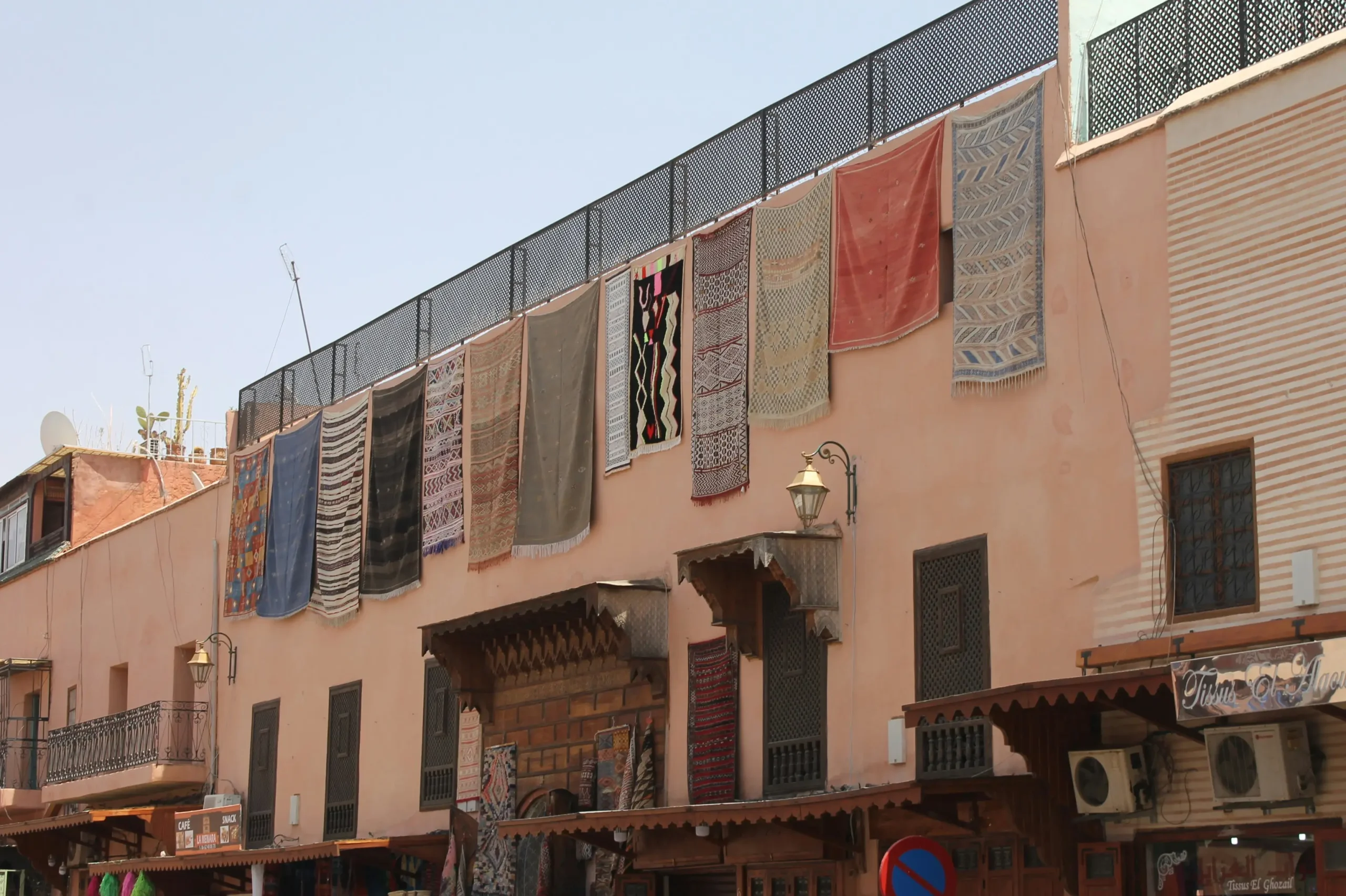
The souks, Marrakech

Morocco’s craft tradition is not souvenir territory. It is a living practice — leather tanned in the same vats that have been used since the Middle Ages, silver worked by hand, textiles woven on looms that require a decade to learn properly.

For clothing: Norya Ayron is the name serious shoppers know — a kaftan designer whose pieces have been worn by Kate Moss and Sharon Stone, cutting traditional shapes and pulling them forward with extraordinary fabric selection. Small shop in the medina, larger one in Gueliz. Oubaich is the other essential stop — dresses, shirts and co-ords in satin silk, woven linen and velvet corduroy in colors and combinations that bear no resemblance to the cut-and-paste kaftan shops surrounding it. Genuinely original. Laly, designed by Basra Benjelloun, does beautiful wearable women’s pieces in quality fabrics with a Moroccan spirit — the kind of thing you arrive home with and actually wear. And on Rue Dar el Bacha, steps from the Dar el Bacha museum, Topolina is the boutique that stops people mid-walk — French designer Isabelle Topolina, former couture patternmaker, who decamped to Marrakech and built a collection from fabrics she found in the souks: festive prints, vintage cuts, the occasional wax-print textile from Senegal. Her son Pierre-Henry runs the men’s shop next door at number 114. Two small shops. Very easy to leave with four dresses and a coat.

Valérie Barkowski: a Belgian designer who arrived in Marrakech in 1996 and spent years on a personal quest to revive the near-extinct tradition of hand-embroidered Moroccan linens, a craft that had all but disappeared when she arrived. The linens are exquisite — table linens, cushions, textiles of genuine beauty and genuine craft. Her boutique is at 142 Arset Aouzel, near Mustapha Blaoui. Visit both on the same afternoon.

Abril Ali at Antiquité du Sahara, Rahba El Kadima number 176, is where to go for Saharan antique jewelry and objects — Berber and Tuareg pieces mostly, silver and brass, things that have traveled a long way to end up here. Fouzi Abril knows what he has and where it came from. Ask him.

In Sidi Ghanem, the design district about fifteen minutes from the medina, several serious contemporary design shops have colonized the old industrial quarter and made it the most interesting shopping destination in the city for those who already know the souks well.

THE ATLAS AND THE SAHARA

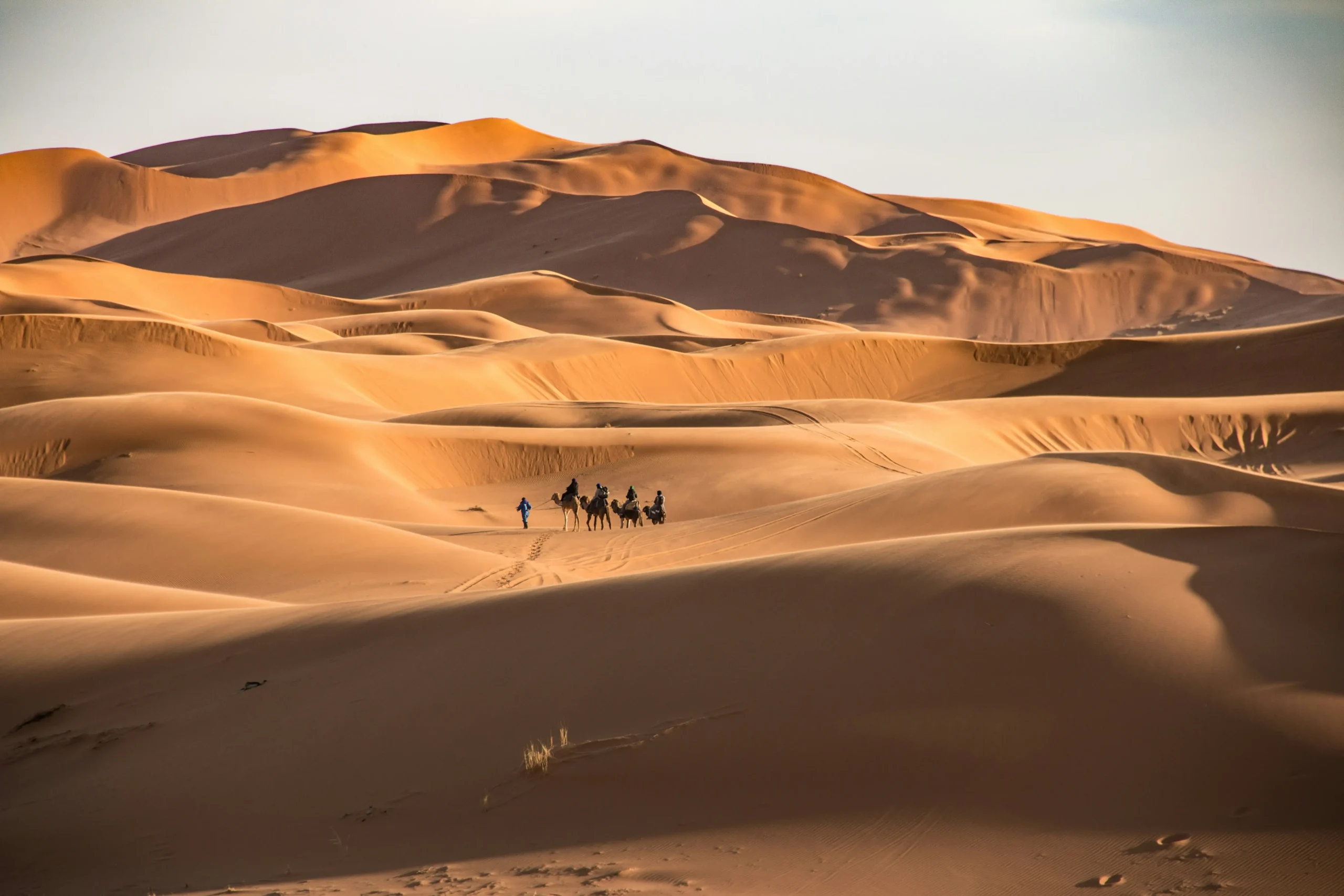
Erg Chebbi Morocco - Image credit peter-schulz

Sahara dunes at dawn, Erg Chebbi

Kasbah Tamadot, Richard Branson’s High Atlas retreat in the mountains two hours from Marrakech, is the most comfortable gateway into the south — traditional Berber suites, a spa, extraordinary views of the Atlas peaks. Use it as the transition between the city and the desert.

Beyond the Atlas, the road descends through the Draa Valley: ancient kasbahs, palmeries, a landscape that barely changes over a hundred kilometers, toward the dunes of Erg Chebbi at Merzouga. The dunes are not what you expect. Nothing has prepared you for the scale of them — waves of sand 150 meters high running to the horizon, the color changing from pale gold at midday to deep orange at dusk to something almost red in the last light. Stay overnight in a proper desert camp. Wake up before dawn. Watch the sky go from black to purple to pink to white as the sun comes up over the Algerian border. This is the reason Morocco is a country that people return to.

Courtesy of Royal Monsour
Courtesy Of La Mamounia

Marrakech; La Mamounia gardens