
Search icon
Adventure

Written by: The Va Beau Team July 6, 2026

Bhutan the kingdom at the edge of the world

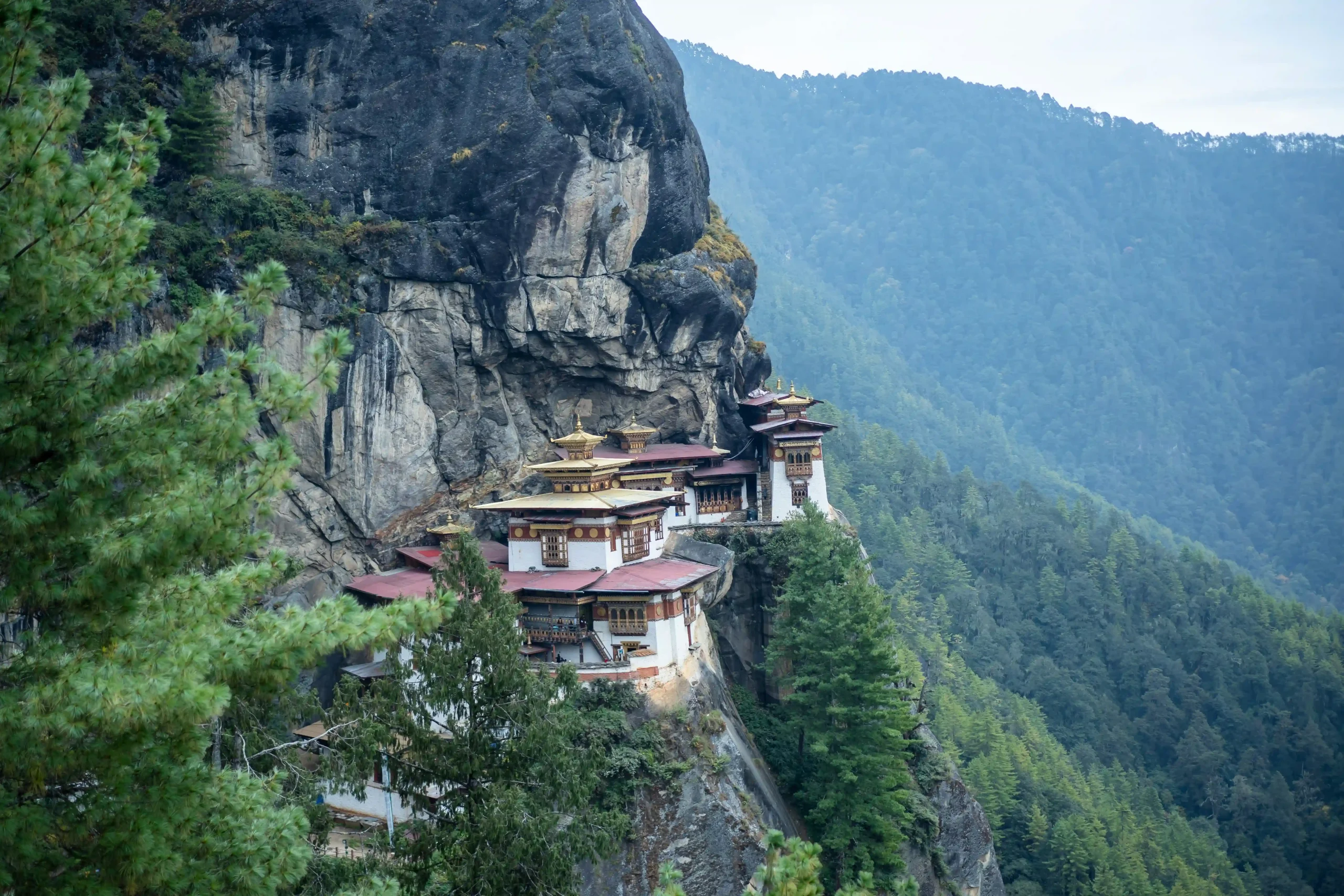
Taktsang Monastery Image credit raimond-klavins- placeholder

Bhutan is the only country in the world that measures its national success in Gross National Happiness rather than GDP. It is also carbon negative — the country absorbs more carbon than it produces, constitutionally. The forest cover is mandated at no less than 60% by law, and currently sits above 70%. It has no traffic lights because the government decided, and this is a real decision that actually happened, that traffic policemen directing cars with choreographed elegance was more in keeping with Bhutanese values than machines.

You may read these facts and think they sound like a marketing strategy. You may be right. And after spending time in Bhutan you will stop caring about the distinction, because the place itself — the landscape, the people, the quality of the air, the way time operates differently here — is real, and it is unlike anywhere else.

Before You Go

Entry to Bhutan requires a government-licensed tour operator, a certified local guide for every day you are there, and a Sustainable Development Fee of $100 per person per day. This is not a surcharge. It directly funds free healthcare, free education, and the infrastructure that keeps Bhutan what it is. The tourism model is designed to limit numbers and maximize depth of experience rather than process volume. It works. The price is the reason Bhutan has not become what Thailand has become, which is the most important sentence in this paragraph.

The flight into Paro is one of the great approaches in aviation. The plane drops through mountain valleys, banking between peaks so close you feel like you could reach out, the landing strip appearing at the last possible second at the bottom of a narrow valley. Pilots certified to fly into Paro are a small and exclusive club. You step off the plane into mountain air at altitude and something in your nervous system adjusts immediatel
THE TIGER'S NEST

Taktsang Monastery Image credit raimond-klavins-

Taktsang Monastery, Paro Valley

Taktsang Monastery is the image everyone associates with Bhutan, and images do not prepare you for it. The monastery appears to be fused to a sheer cliff face 3,000 meters above sea level — buildings growing out of the rock, connected by bridges and staircases cut into the stone, reached only by a hiking trail through rhododendron forest that takes two to three hours going up. The legend says the Guru Rinpoche, who brought Buddhism to Bhutan in the 8th century, flew here on a tigress and meditated in the caves now inside the monastery. Hence the name.

At the top, the monastery is a functioning place of worship. Butter lamps burn. Monks are in attendance. The smell of incense is everywhere. Prayer flags string between the cliffs snap in the wind that comes constantly from the valley below. It is genuinely, physically, one of the most extraordinary places on earth — not because of how it looks, though it looks extraordinary, but because of what it represents: a civilization that built something this difficult, at this altitude, as an act of devotion, and has been maintaining it ever since.

The hike down is harder on the knees than the hike up. Start early. Bring water.

Where to Sleep

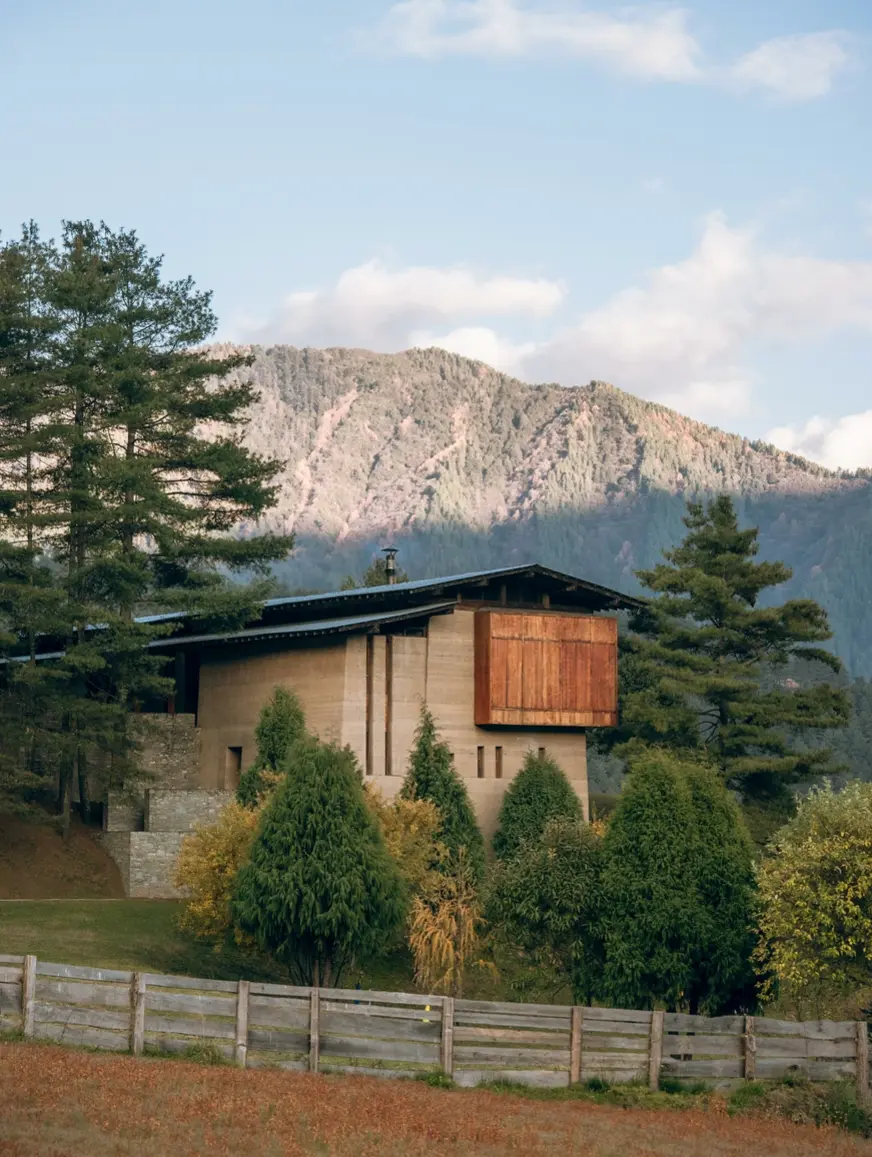
Amankora Gantey Lodge
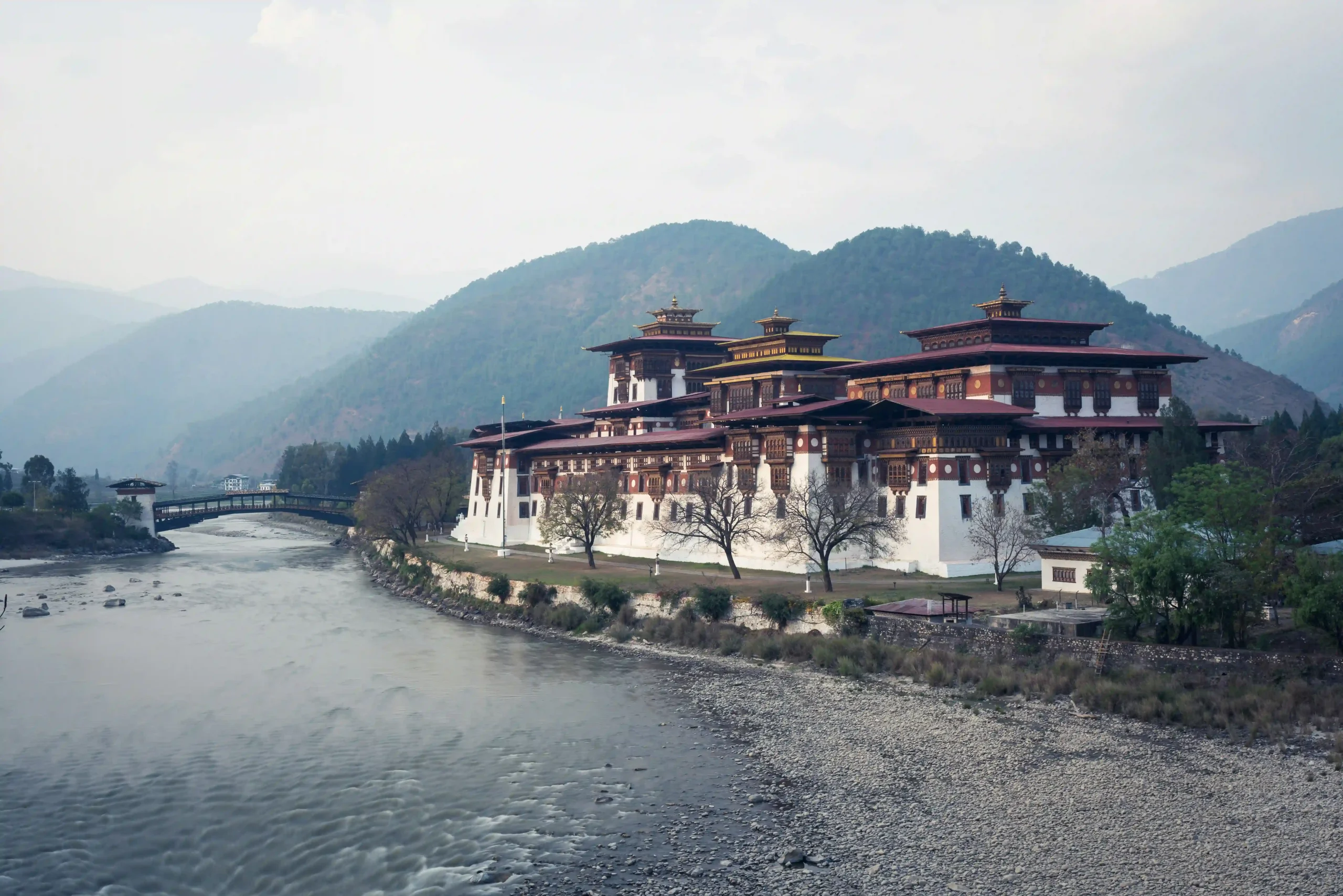
Punakha Dzong - image credit - nils-leonhardt

Amankora; Punakha Dzong, Bhutan

Amankora operates five lodges across five valleys — Paro, Thimphu, Punakha, Bumthang, and Gangtey — each one a cluster of traditional dzong-style buildings connected by private guides and a deepening journey through the kingdom. It is the most complete and considered way to experience Bhutan. The guiding is exceptional, the connection between lodges logical and intelligent, and the cumulative effect of five days moving through five valleys with someone who knows the country deeply is something you cannot replicate any other way.

Six Senses Bhutan offers five lodges with the same multi-valley structure, floor-to-ceiling glass walls framing Himalayan views, and a wellness program grounded in Bhutanese traditions. Gangtey Lodge, in the Phobjikha Valley where black-necked cranes winter from November through February, is the intimate and accessible alternative for those who want one exceptional base rather than a circuit.

Punakha and Beyond

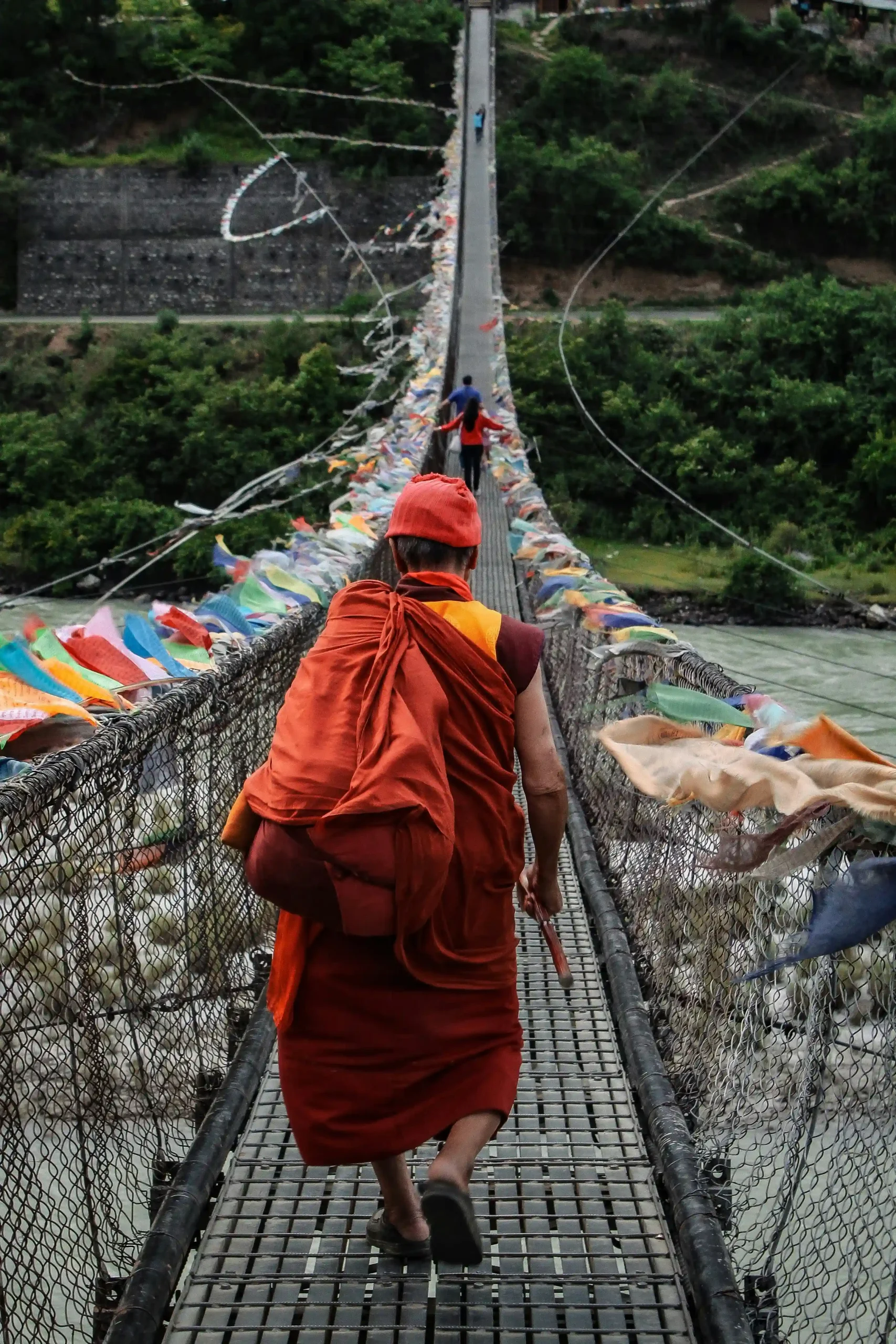
Prayer flags, Bhutan

Prayer flags, Bhutan

The Punakha Dzong sits at the confluence of the Pho Chhu and Mo Chhu rivers — the Father and Mother rivers — with its white walls and gilded roofs surrounded by jacaranda trees that turn purple in spring, the mountains rising behind it. It is the most beautiful building in Bhutan and one of the most beautiful in Asia. In the spring, when the jacaranda are in bloom and the snow is still on the peaks and the rivers are running full, it is almost too much.

Thimphu, the capital, is a city of perhaps 115,000 people that has managed to grow without losing itself entirely. The National Memorial Chorten is where Thimphu’s residents come to circumambulate in the mornings. The Buddha Dordenma — 51 meters of gilded bronze on a hilltop above the city, housing thousands of smaller Buddha figures within — is visible from everywhere. It was consecrated in 2015 to mark the 60th anniversary of the fourth king’s birth and it is, by any measure, extraordinary.

The Punakha Tshechu festival, held over three days in late winter or early spring, features sacred masked dances performed by monks in elaborate costumes — a ceremony that has been performed here for centuries and has no equivalent anywhere else on earth. If your travel dates align with it, change them.