

THE TEMPLES
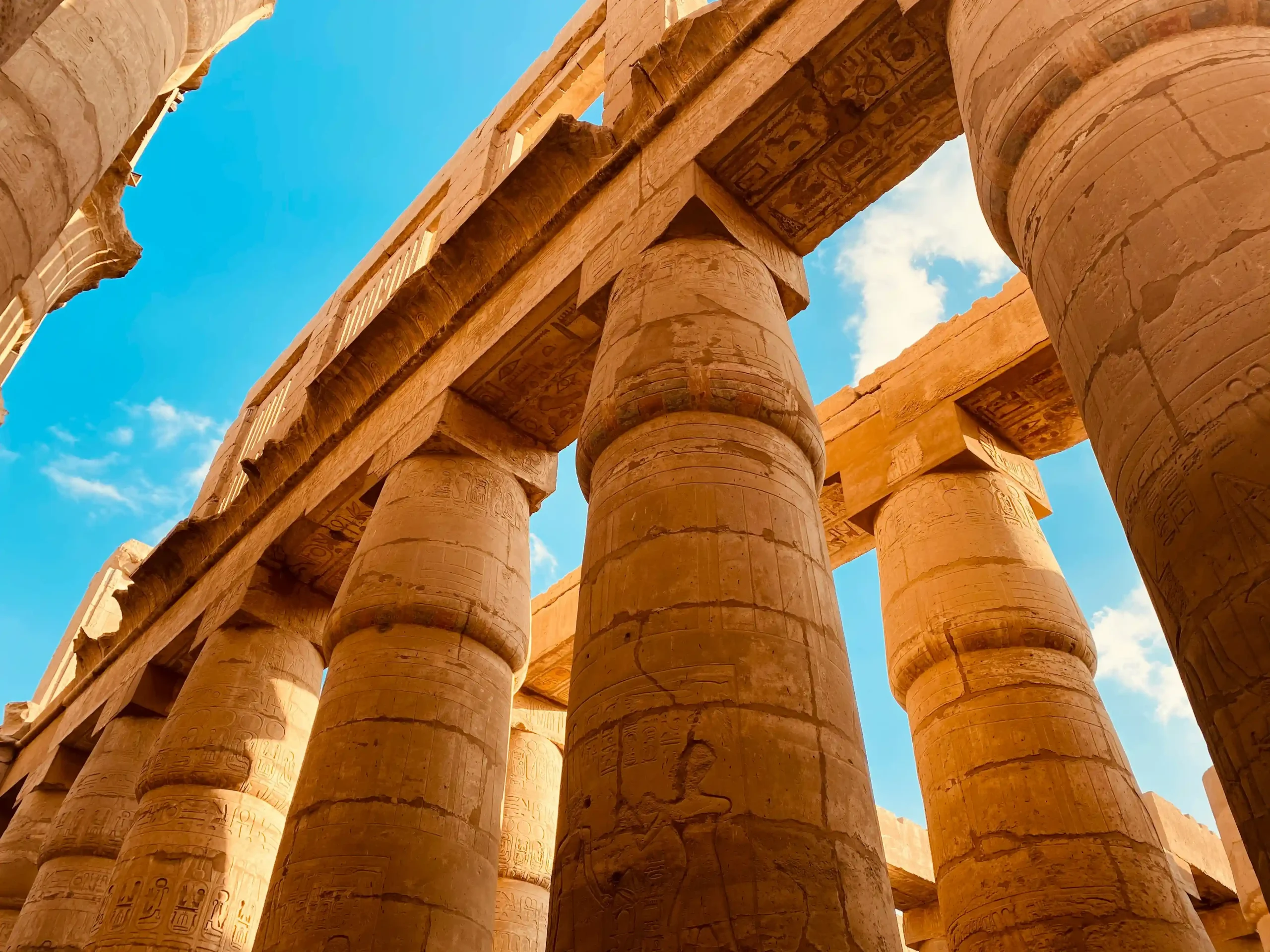
Karnak Temple Complex is the largest religious structure ever built — a compound of temples, obelisks, sacred lakes, and processional avenues accumulated over two thousand years of successive pharaohs. Visit at dawn, before the heat arrives, when the light is low and the columns cast long shadows. Luxor Temple, connected to Karnak by a three-kilometer avenue of sphinxes, is worth seeing at night when illuminated.
Cross the Nile to the West Bank. The Valley of the Kings holds sixty-three royal tombs cut directly into the rock, their walls painted in colors, lapis blue, malachite green, ochre, deep red, that seem recent. They are three thousand years old. The pigments were ground from semi-precious stones by people whose names we mostly don’t know.
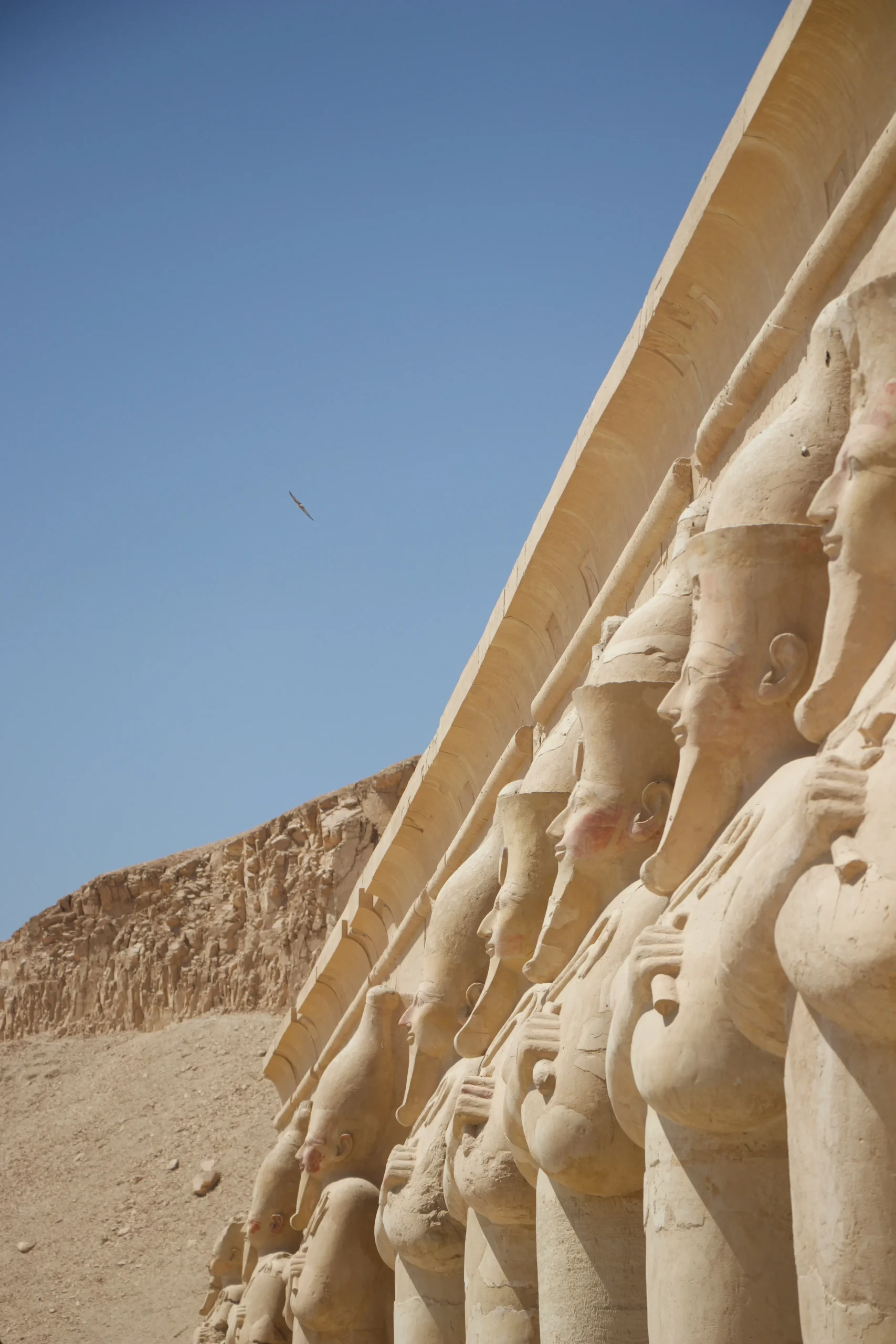
Hatshepsut’s mortuary temple at Deir el-Bahri rises in three colonnaded terraces against the cliff face in the morning light. Arrive before the tour groups. The combination of scale, silence, and quality of early morning light makes it one of the most powerful sights in Egypt. Hire a private Egyptologist guide for every day on land — the difference between seeing and beginning to comprehend.