Search icon
Adventure

The city that reveals itself slowly

Mexico City doesn’t reveal itself all at once. Just when you think you’ve found its rhythm, another neighborhood, another courtyard, another remarkable meal shifts your understanding of it entirely. That sense of discovery is part of the city’s pull, and one of the reasons a first visit so often leads to a second.

Scale has something to do with it. More than twenty-one million people live across this high-altitude metropolis, built over the remnants of an ancient lake some 7,300 feet above sea level. Yet Mexico City rarely feels like a single vast city. Its neighborhoods operate almost as worlds of their own, each with a distinct architecture, pace and personality. You could easily spend a week here and still leave with a list of things you didn’t get to. If it’s your first visit, give yourself at least four days.

Choosing where to stay is therefore less about finding the city’s “best” hotel than deciding which version of Mexico City you want outside your door.

HOTELS

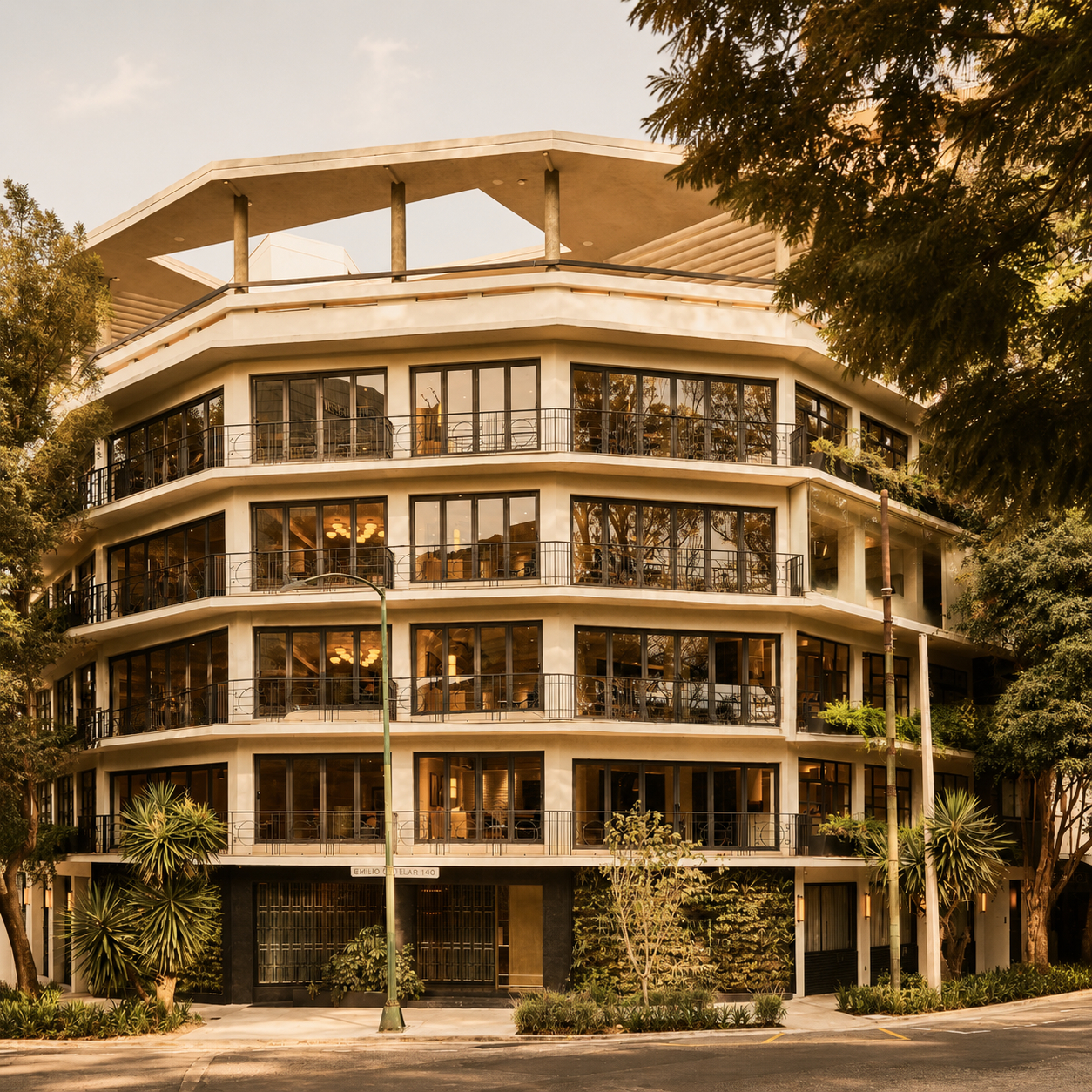
In Polanco, one of the city’s most elegant and established neighborhoods, Campos Polanco is among its most discreet places to stay. Set in a restored Art Deco building on leafy Campos Elíseos, the twelve-suite hotel has the ease of a private residence rather than the formality of a traditional luxury property. The interiors draw on Mexican design and craftsmanship without turning either into decoration, and the scale gives the place an intimacy that’s increasingly rare in the city.

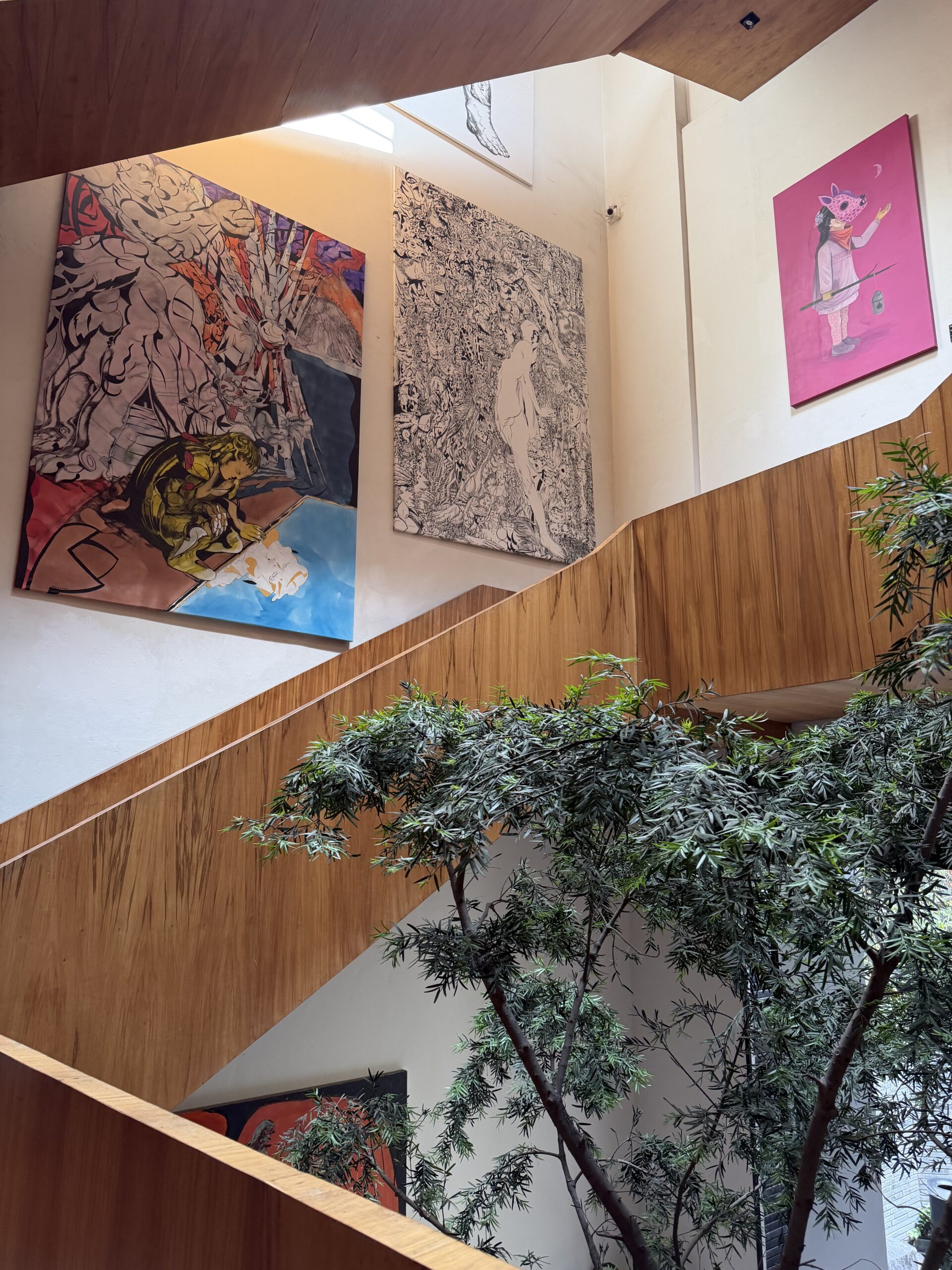
Also in Polanco, Casa Polanco occupies a restored mansion overlooking Parque Lincoln. With just nineteen rooms and suites, it feels closer to an exceptionally well-appointed private home, filled with contemporary Mexican art, custom furniture and pieces by some of the country’s most important designers. Its position on the park is difficult to improve upon: step outside in the morning and you’re immediately among Polanco’s cafés, galleries and tree-lined streets.

For a more traditional expression of luxury, Las Alcobas sits directly on Avenida Presidente Masaryk in Polanco. The former private residence was transformed by Yabu Pushelberg and, with only thirty-five rooms, retains a welcome intimacy. It’s an especially good choice for travelers who want polished service and the ability to explore Polanco largely on foot.

On Paseo de la Reforma, beside Chapultepec Park, the Four Seasons offers a very different experience. Its great surprise is the courtyard at its center: a lush, improbably tranquil garden hidden from one of the city’s busiest avenues. A few minutes away, the Ritz-Carlton Mexico City trades intimacy for altitude, with sweeping views across Chapultepec and the skyline beyond.

Back in Polanco, The Wild Oscar is a smaller, residential alternative with a particularly walkable location. In Condesa, Condesa DF remains one of the city’s original design hotels. The rooftop still has appeal, but the real reason to stay is the neighborhood itself: Parque España, Parque México, cafés and tree-lined streets are all just outside the door.
CONDESA AND ROMA NORTE

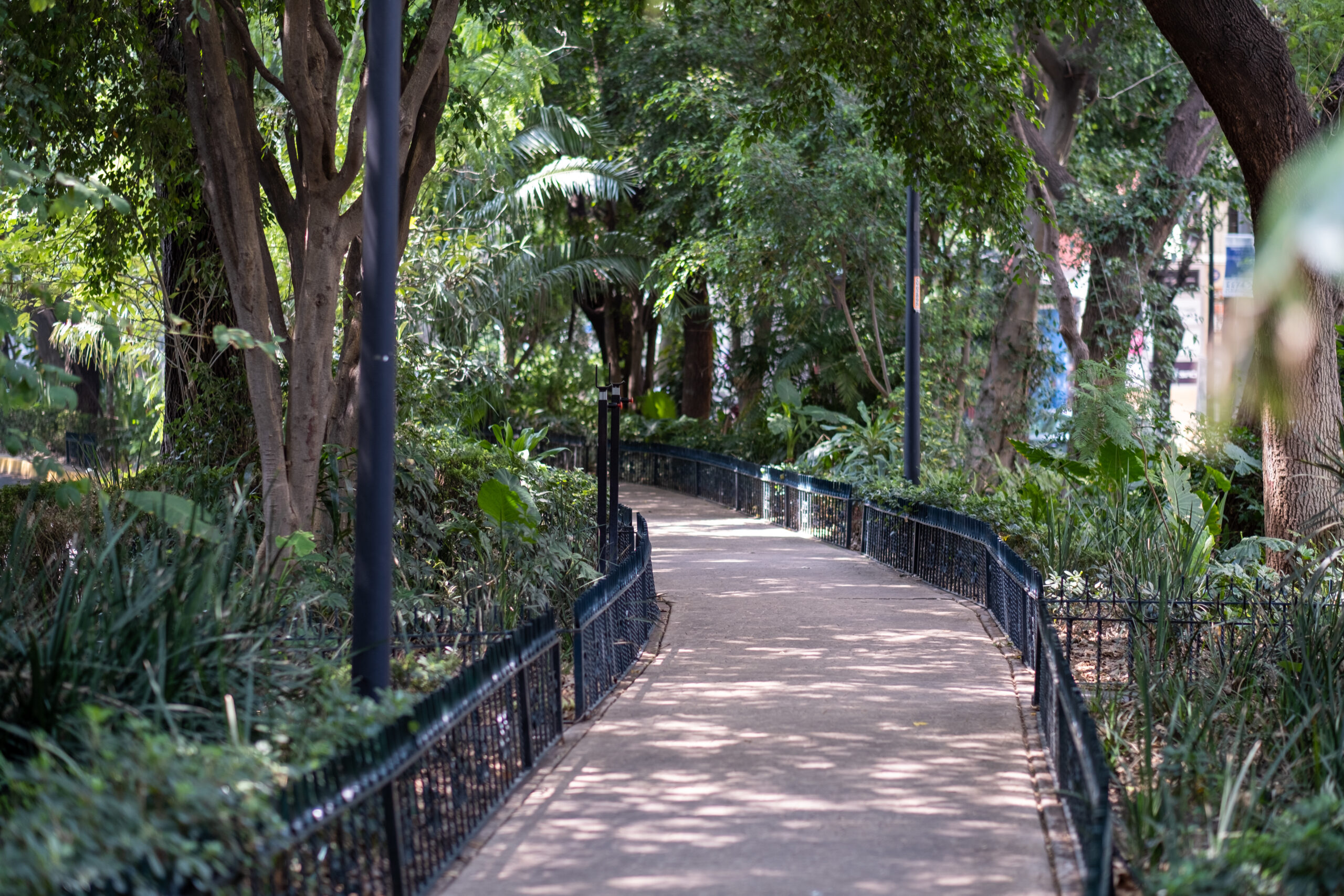
Begin in Condesa. Avenida Amsterdam curves around the neighborhood on the footprint of a former horse-racing track, forming a leafy loop of Art Deco apartment buildings, cafés and pocket gardens. Follow it toward Parque México, where dog walkers, young families and friends lingering over coffee give you a better introduction to the neighborhood than any checklist could. Condesa’s appeal is partly architectural, but mostly atmospheric: shaded streets, handsome buildings and a pace that encourages you to walk without much of an agenda.

Cross into Roma Norte and the mood shifts. The architecture becomes more eclectic, the storefronts more independent, and some of the city’s most interesting restaurants, galleries and shops appear almost casually behind restored façades. Start with Calle Colima and wander from there. Many of the neighborhood’s best independent boutiques, galleries, cafés and restaurants are clustered around these streets, so you don’t need much of a plan.

POLANCO AND THE SOUTH

Polanco is Mexico City’s most polished neighborhood, with wide tree-lined streets, excellent restaurants and the city’s largest concentration of international luxury brands. Avenida Presidente Masaryk is the main shopping street, but El Palacio de Hierro is worth seeing even if you aren’t planning to shop. Prada, Saint Laurent, Loewe and dozens of other brands sit inside a department store that feels closer to an architectural destination than a conventional mall.

If you’re serious about shopping, Artz Pedregal is worth the drive south. Located in Jardines del Pedregal, a part of the city shaped by volcanic lava fields and the modernist legacy of Luis Barragán, the complex brings together Chanel, Hermès, Dior, Cartier, Louis Vuitton and Gucci alongside large-scale contemporary art. The setting makes it a very different experience from shopping in Polanco.

Also make time for Casa Luis Barragán in Tacubaya. His former home and studio is one of the most important works of modern architecture in Mexico and a UNESCO World Heritage Site. The house is remarkably restrained, but Barragán’s use of saturated color, natural light, gardens and almost monastic spaces makes it unforgettable.

RESTAURANTS

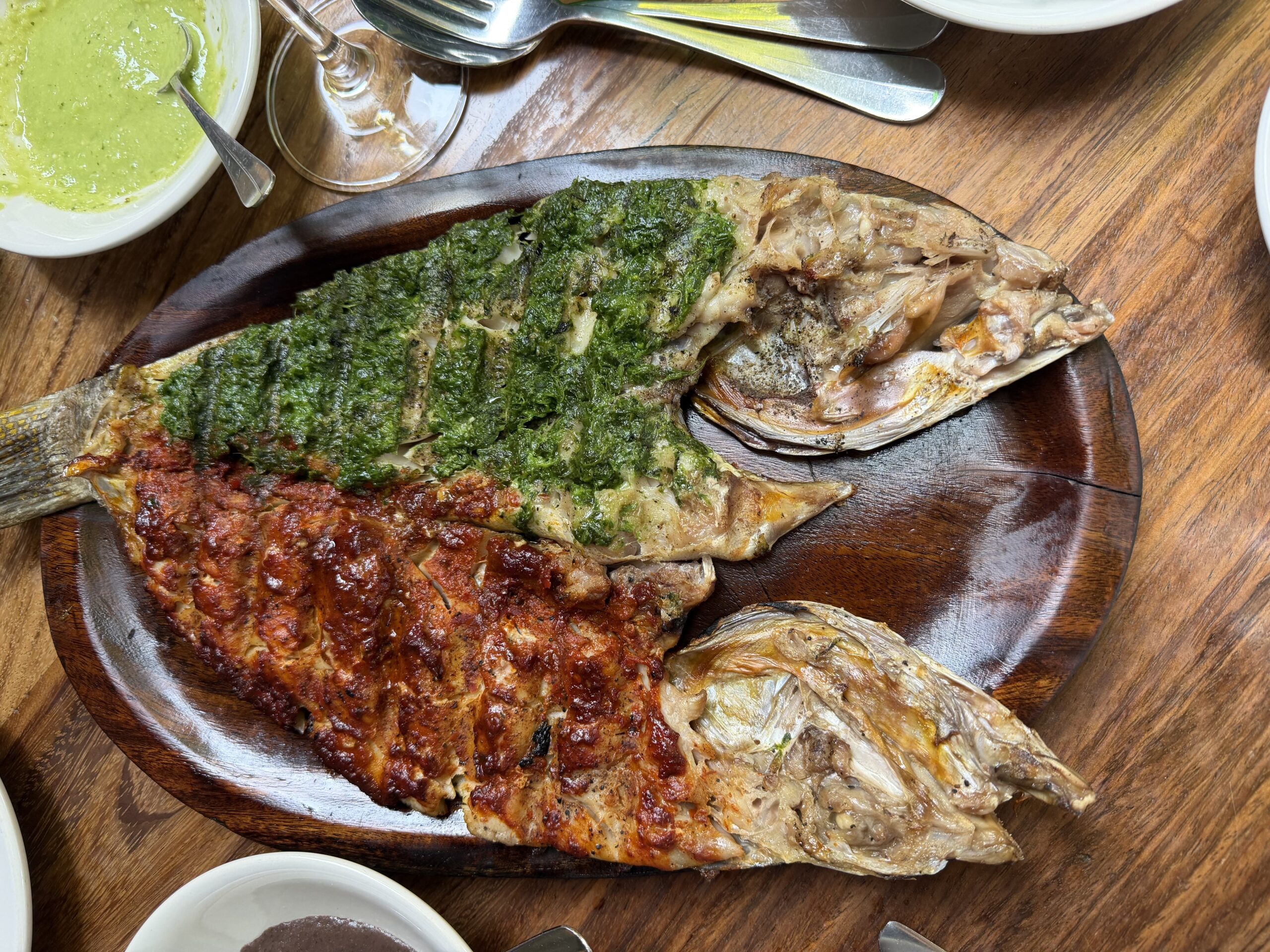
Contramar is one of those rare restaurants that deserves its reputation. Gabriela Cámara has been serving seafood here since 1998, and it remains one of Mexico City’s defining restaurants. Start with the tuna tostadas, followed by the pescado a la talla, a whole fish grilled with red chile adobo on one side and a fresh parsley preparation on the other, served with warm tortillas. The atmosphere is lively and unhurried, with the kind of energy that has made Contramar an enduring part of the city’s dining culture.

On Calle Colima in Roma Norte, Lotti is one of the newer restaurants worth knowing about. Chef Luc Liebster trained at Steirereck in Vienna before working at Pujol and named the restaurant after his grandmother. His cooking combines European technique with Mexican ingredients in ways that can be surprising without feeling contrived. The dehydrated watermelon sounds almost too clever on paper but turns out to be remarkably restrained; the El Dorado rockfish, cooked confit with legumes and vin jaune sauce, is another standout.
In Condesa, Lardo is bright, relaxed and European in spirit, with the kind of easy atmosphere that suits the neighborhood. The menu moves comfortably from pastries and eggs to salads, vegetables and more substantial dishes. If the eggs wrapped in hoja santa with fresh cheese are on the menu, order them. Back in Roma Norte, Panadería Rosetta is known for its guava pastry, buttery, flaky and just sweet enough, and one of the city’s most recognizable bakery signatures.

DESIGN, BOOKS AND FASHION

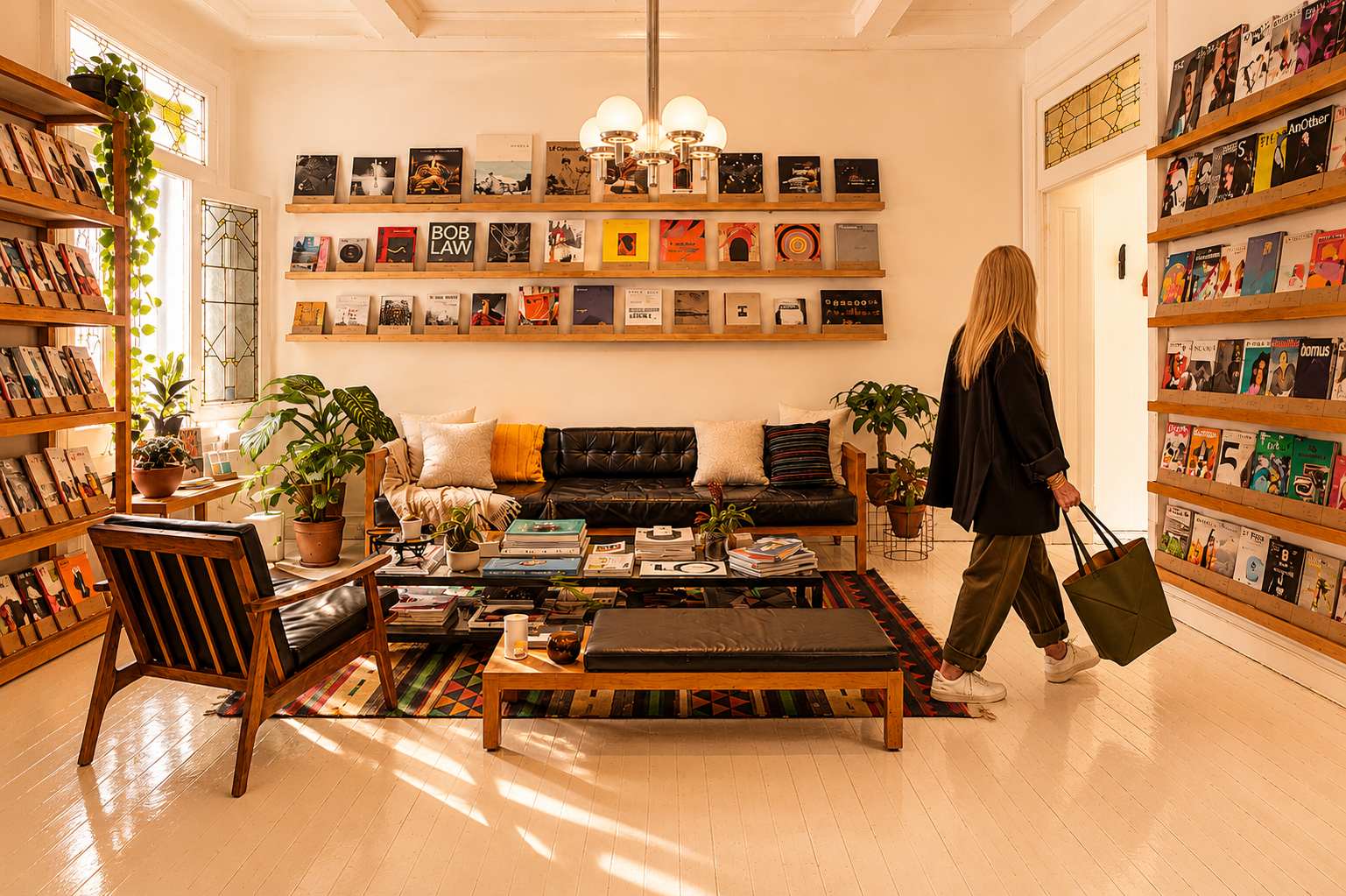
Casa Bosques in Roma Norte is an independent bookstore with the sensibility of a gallery. Art, architecture, photography and independent publishing dominate the shelves, alongside its own beautifully packaged chocolate.

Utilitario Mexicano makes you notice the design of ordinary Mexican household objects: enamelware, brushes, glassware, kitchen tools and pieces that have often been made in much the same way for generations.

Carla Fernández belongs on any serious fashion itinerary. Her work begins with Mexico’s indigenous textile traditions and collaborative relationships with artisan communities, but the result is resolutely contemporary.

In Condesa, Mutuo offers a more contemporary fashion perspective, while Fábrica Social works with women artisans across Mexico to bring traditional textile techniques into beautifully made contemporary pieces.

For fragrance, make your way to Xinú in Juárez. The experience is deliberately slow. Botanical fragrances are presented beneath hand-blown glass vessels, turning the process of choosing a scent into something closer to a ritual than a retail transaction.

TANE remains one of the great names in Mexican silver. Before leaving Roma Norte, spend an hour at Cafebrería El Péndulo on Álvaro Obregón, part bookstore, part café and part neighborhood institution.

CHAPULTEPEC AND THE MUSEUMS

The Museo Nacional de Antropología is one of Mexico City’s essential cultural institutions. Its vast collection traces the civilizations that shaped Mexico long before the Spanish arrived, moving through the worlds of the Mexica, Maya, Olmec, Teotihuacán and other cultures with remarkable depth.

At the heart of the collection is the monumental Sun Stone, one of the most recognizable surviving works of the Mexica civilization. But the museum’s scale extends far beyond a single masterpiece. Colossal Olmec heads, Maya funerary objects, intricate jewelry and reconstructed temples reveal the extraordinary sophistication and diversity of Mexico’s pre-Hispanic cultures.

Outside, Bosque de Chapultepec offers a change of scale. When you’re ready for lunch, Bistró Chapultepec sits beside Lago Mayor in the park’s second section.

For contemporary art, continue to Nuevo Polanco, where Museo Soumaya and Museo Jumex face one another across Plaza Carso. Soumaya announces itself with its curving reflective façade; Jumex, designed by David Chipperfield, is the quieter counterpoint. See them together. The contrast between the buildings is almost as interesting as the collections.

COYOACÁN AND XOCHIMILCO

Coyoacán still carries traces of the village it was before Mexico City absorbed it. The streets narrow, the pace softens and life gathers around leafy plazas and old stone houses. It’s tempting to come solely for Frida Kahlo, but doing so misses much of the neighborhood’s charm.

The Frida Kahlo Museum, better known as La Casa Azul, offers something more intimate than a conventional museum. Her clothes, personal objects, studio and living spaces bring you closer to the woman behind an image that has become almost impossibly famous. Afterwards, stay in Coyoacán. Walk through Jardín Centenario, browse the market and find somewhere shaded for lunch.

Then, if you want to see a completely different Mexico City, continue south to Xochimilco. Its surviving canals and chinampas preserve a connection to the pre-Hispanic lake landscape that has disappeared almost everywhere else in the city.

The brightly painted trajineras are not a quaint historical reenactment. They’re part of contemporary Mexico City life. Families celebrate birthdays aboard them, friends arrive with food and drinks, mariachi musicians pull alongside one boat while vendors approach another with corn, flowers and snacks. Xochimilco isn’t meant to be hushed. Its appeal is color, music, families, food and cheerful disorder unfolding on the water.

CENTRO HISTÓRICO

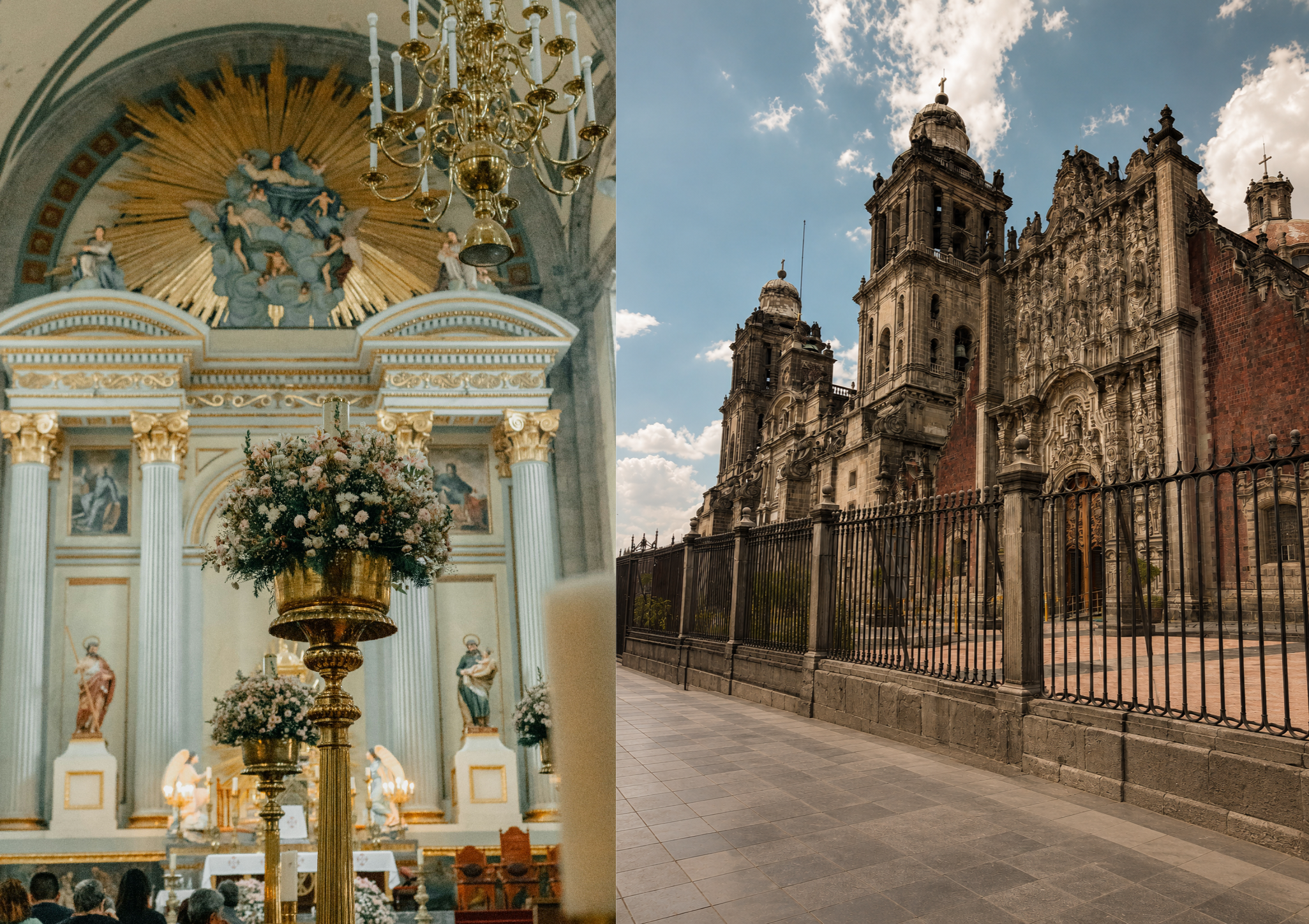
The Centro Histórico makes the city’s history visible in layers. At its center is the Zócalo, the immense public square bordered by the Metropolitan Cathedral and the National Palace. This has been the symbolic heart of the city for centuries, although the civilization occupying it has changed dramatically.

At Templo Mayor, the remains of the ceremonial center of Tenochtitlán emerge directly beside the colonial city built over it. The juxtaposition is startling. Spanish churches and government buildings rise above the foundations of the Mexica capital, making conquest, destruction and reinvention physically visible within the same few blocks.

This isn’t a city that discarded one identity and adopted another. It accumulated them. Ancient, colonial and contemporary Mexico continue to occupy the same ground. Afterwards, walk rather than drive. Centro rewards looking upward: carved stone façades, tiled buildings, elaborate balconies and unexpected courtyards appear between storefronts and crowded sidewalks.

TEOTIHUACÁN

Leave the city behind for a morning and head north to Teotihuacán. Even after Mexico City has recalibrated your sense of history, Teotihuacán manages to do it again.

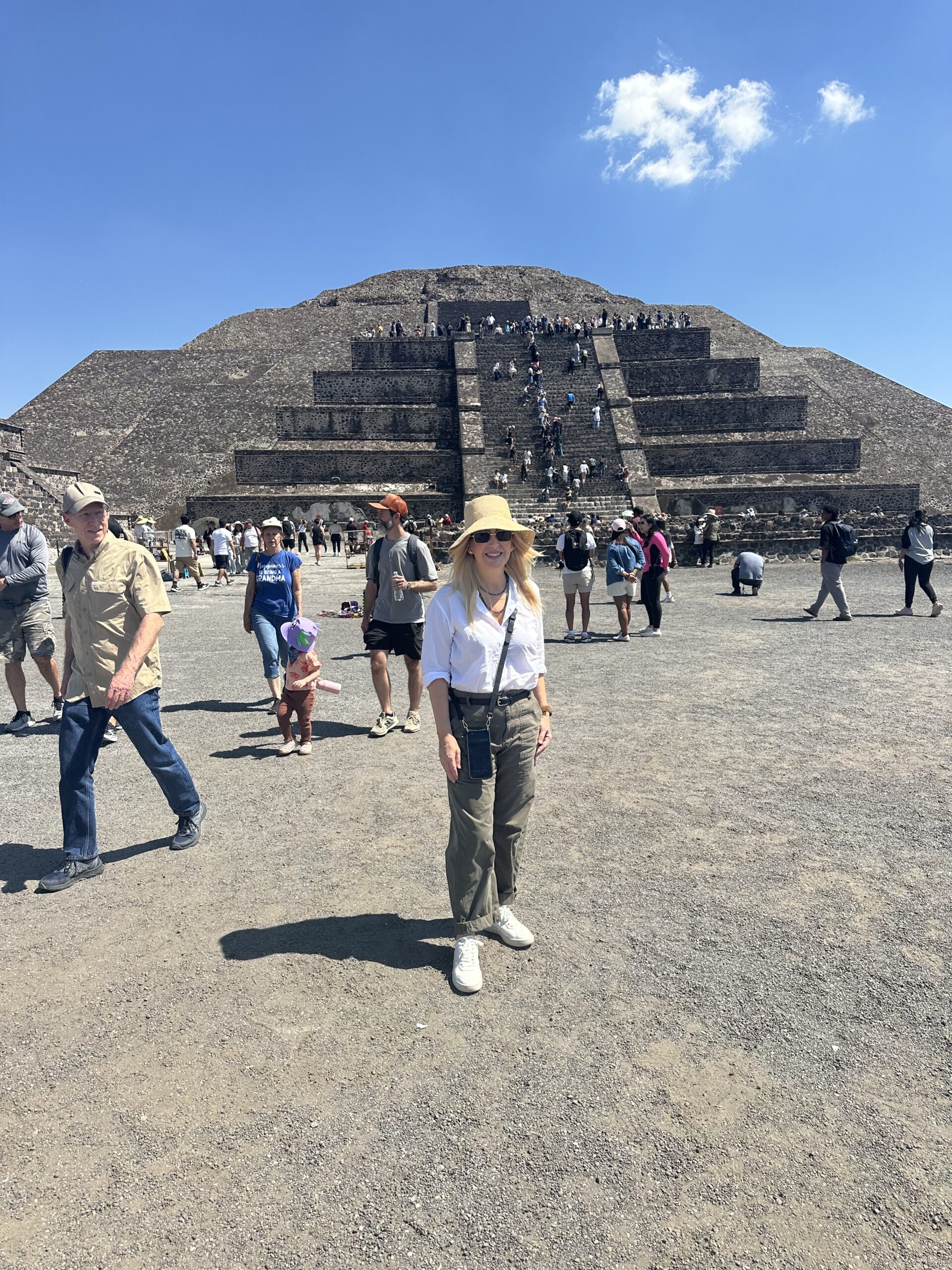
The civilization responsible for this enormous ancient city remains incompletely understood, yet at its height Teotihuacán was one of the largest urban centers in the ancient world. Its scale only becomes apparent once you begin walking the Avenue of the Dead. Ahead, the Pyramid of the Sun rises with an almost geometric severity. The Pyramid of the Moon anchors the avenue beyond it, while temples, plazas and residential compounds stretch across a landscape framed by mountains.

What’s striking isn’t simply the size of the pyramids. It’s the realization that this was a functioning metropolis, carefully planned centuries before the Mexica founded Tenochtitlán. Access rules at the archaeological zone can change, so check the official INAH information before your visit rather than building the day around climbing a particular monument.

WHY YOU'LL COME BACK

Mexico City rewards leaving a little room in the day. Some of the best moments aren’t the museums, restaurants or landmarks you planned around, but what happens between them: coffee under the trees in Condesa, a gallery you notice while walking through Roma, a lunch that runs longer than expected or a place you discover because someone nearby tells you to go.

You’ll leave having seen only a fraction of the city, and that is part of its appeal. There is always another neighborhood, restaurant, museum or street to discover, which is why Mexico City so often turns a first visit into the beginning of a much longer relationship.