

RAJASTHAN
Rajasthan is the India of the imagination — desert kingdom, fortress palaces, painted havelis, camel fairs, and cities of such architectural ambition that the word grand feels insufficient. Plan a minimum of ten days. Most people say they needed two weeks.
Jaipur, the Pink City, is the commercial and cultural capital of the state. The Amber Fort, on a rocky ridge above a lake, is a palace complex that took generations of Maharajas to complete and rewards a full morning. The Hawa Mahal — the Palace of Winds, with its 953 latticed windows through which the women of the court could observe street life without being seen — is the image that defines Jaipur from the outside. The City Palace, still partly occupied by the royal family, has one of the finest museum collections of Rajput weaponry, textiles, and art in the world.
Jodhpur is the Blue City: whitewashed houses painted indigo blue in the neighborhood below Mehrangarh Fort, a tradition that began with Brahmin families marking their homes and spread across the hillside. The fort rises 125 meters above the plain on a rocky outcrop that makes it seem less like a building and more like a geological feature. The museum inside is exceptional. The views from the ramparts, over the blue city to the desert beyond, are among the finest in Rajasthan.
Udaipur is water. The city is built on and around a series of lakes in the Aravalli hills and is, by almost universal agreement, the most romantic city in India. The Lake Palace Hotel, a white marble palace on an island in Lake Pichola, has been receiving guests since 1754 and is one of the most iconic hotel experiences in the world. RAAS Devigarh, an 18th-century fort converted to stark minimalist white interiors in the hills outside the city, is the design-forward alternative.
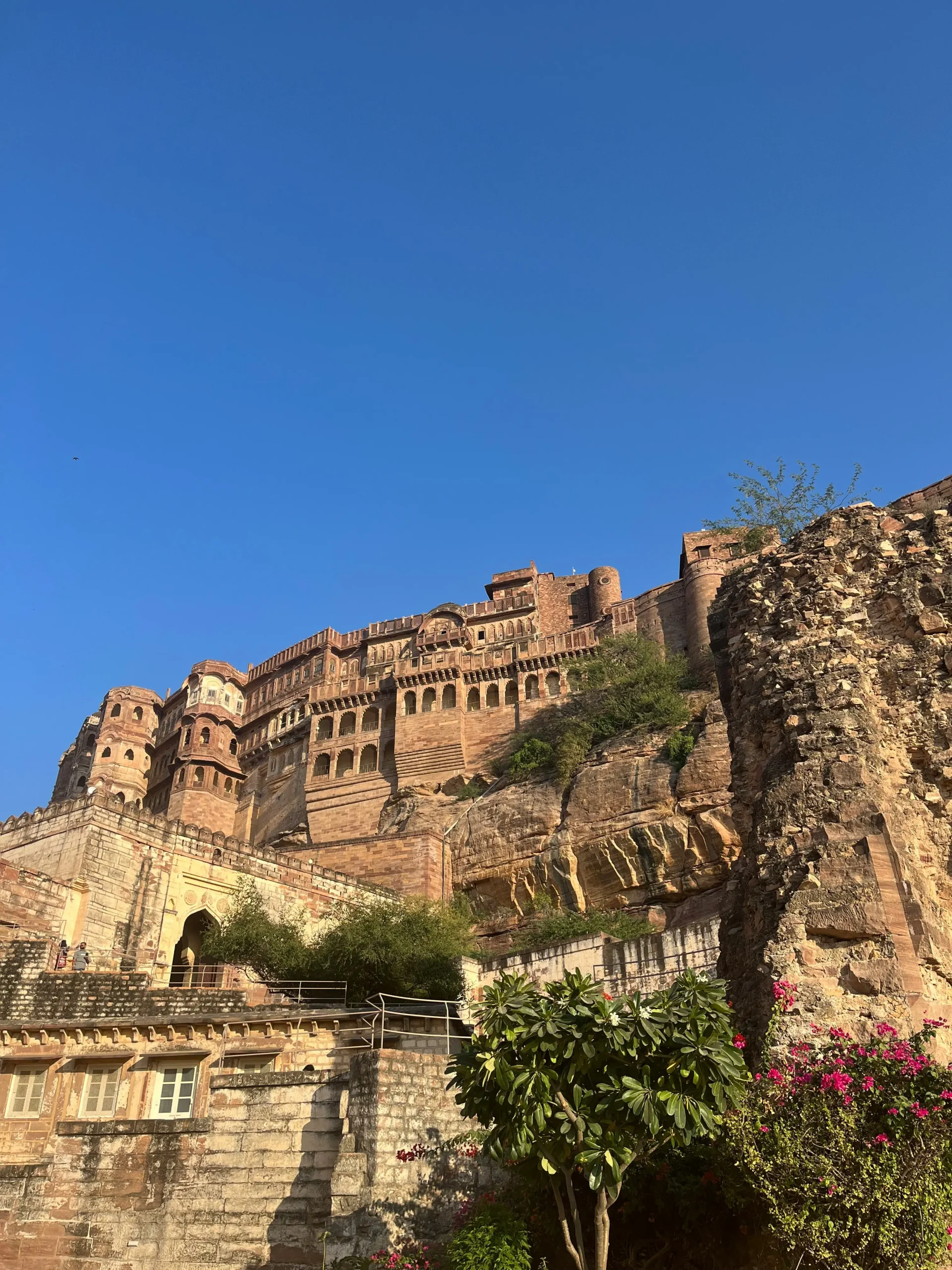
Mehrangarh Fort
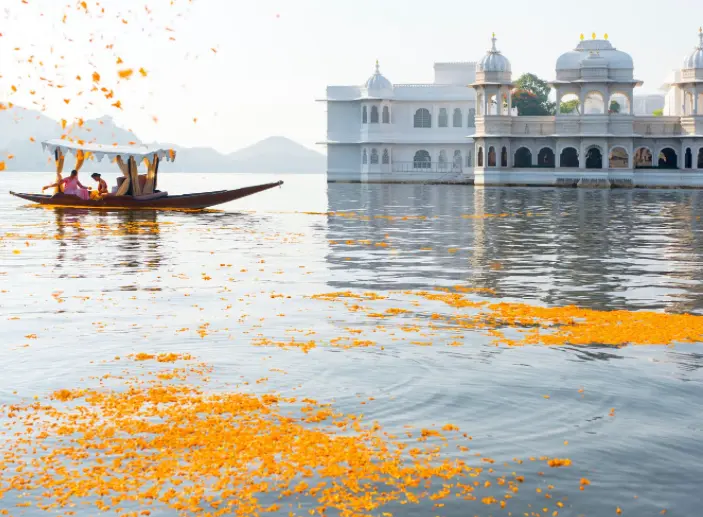
Jodhpur; Lake Palace, Udaipur