Search icon
Adventure

Written by: The Va Beau Team July 6, 2026

Thailand every version of thailand is the right one

Siam Bangkok

Thailand contains several completely different countries and all of them are excellent. The north is cool and mountainous and Buddhist and has a food culture so distinct from the south that a week isn’t enough to begin to understand it. The center is Bangkok, which is simultaneously the most exhausting and the most exhilarating city in Asia — a place that operates at an intensity that either catches you or doesn’t, and if it catches you, it never quite lets go. The south is islands: some genuinely remote, some comprehensively developed, some in between, all requiring you to be honest with yourself about what kind of beach experience you actually want.

The food alone justifies the journey. Thailand produces some of the most complex, layered, technically sophisticated cuisine in the world and serves it from street carts at 3am for the price of a coffee. The gap between the finest restaurant in Bangkok and the best cart on Yaowarat Road in Chinatown is not as large as you might think. Both require your full attention.
CHIANG MAI

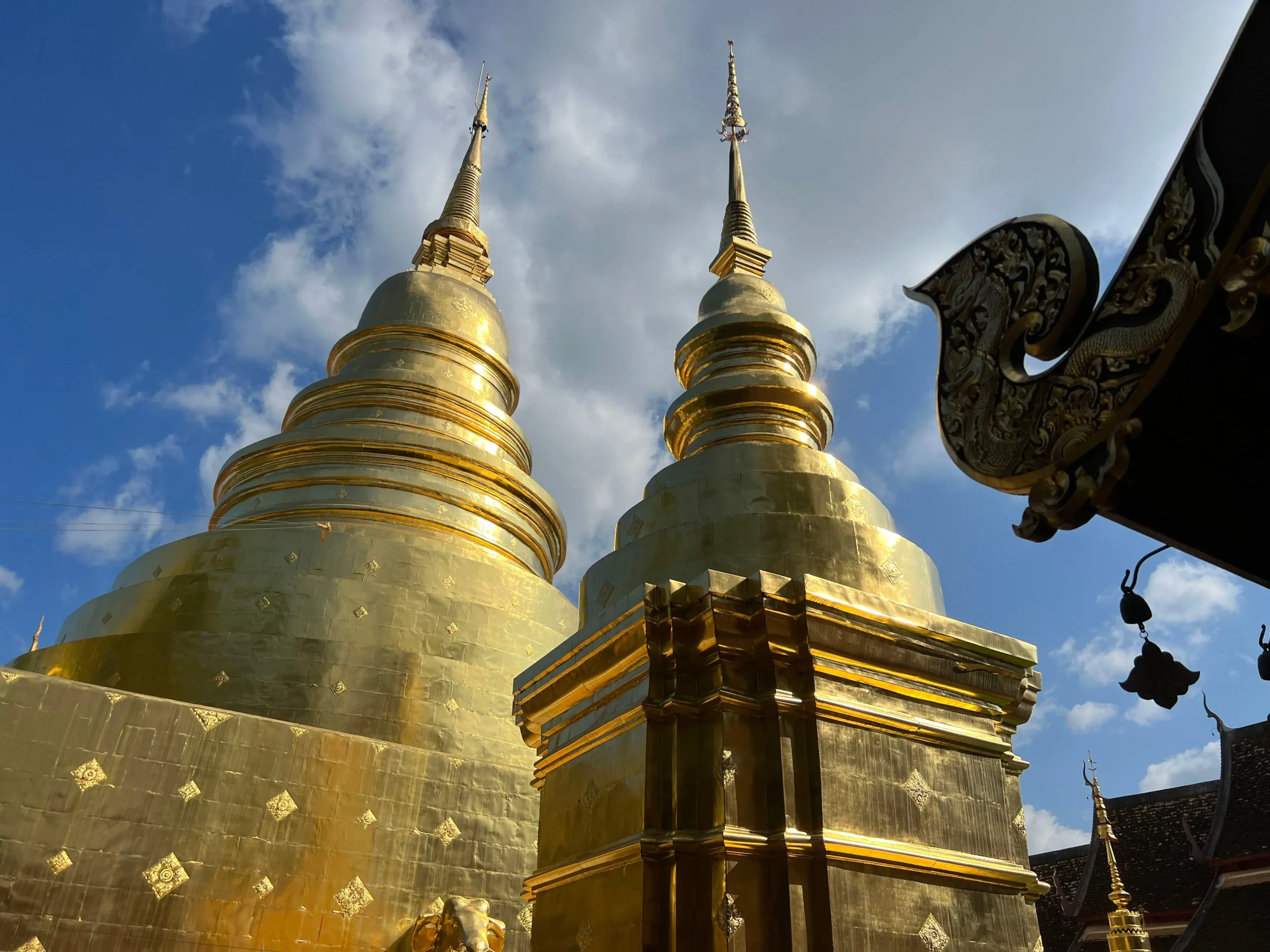
Wat Phra Singh
placeholder

Wat Phra Singh; The Dhara Dhevi, Chiang Mai

Chiang Mai runs at a lower frequency. The air is cooler, the pace more contemplative, the relationship between the city and its Buddhist traditions more visible and more intact than in Bangkok. The old city, enclosed within a square moat, is dense with temples — over 300 within the city limits — and the neighborhood around Nimman Road has become one of the more interesting creative quarters in Southeast Asia.

The khao soi here is the reason people come back to Chiang Mai specifically for the food. Coconut curry noodle soup, served with both soft egg noodles and crispy fried noodles on top, a squeeze of lime, pickled mustard greens, shallots, and a spoonful of chile paste on the side. It is one of the great noodle dishes of the world and the versions here are categorically different from what you find anywhere else in Thailand. Order it on your first morning. Order it again before you leave. Compare. Disagree. This is a legitimate way to spend several hours.

Wat Phra Singh, the most important temple in the old city, houses one of Thailand’s most revered Buddha images — the Phra Singh, whose origins are disputed by three different cities all of which claim the original. The temple itself is beautiful: whitewashed walls, gilded rooflines, teak pavilions with lacquerwork panels depicting scenes from the Jataka tales. The Sunday Walking Street on Wualai Road runs along the old silver district and is one of the finest markets in Thailand — genuine craft, local food, a crowd that is mostly local rather than tourist.

The Dhara Dhevi is a resort built as a traditional northern Thai royal city — pavilion suites, rice paddies, reflecting pools, the architecture of the Lanna kingdom of the 14th century reconstructed at five-star scale. It is either a remarkable feat of cultural preservation or the most elaborately themed luxury resort in Asia, and the honest answer is that it is both. Stay at least three nights.

BANGKOK

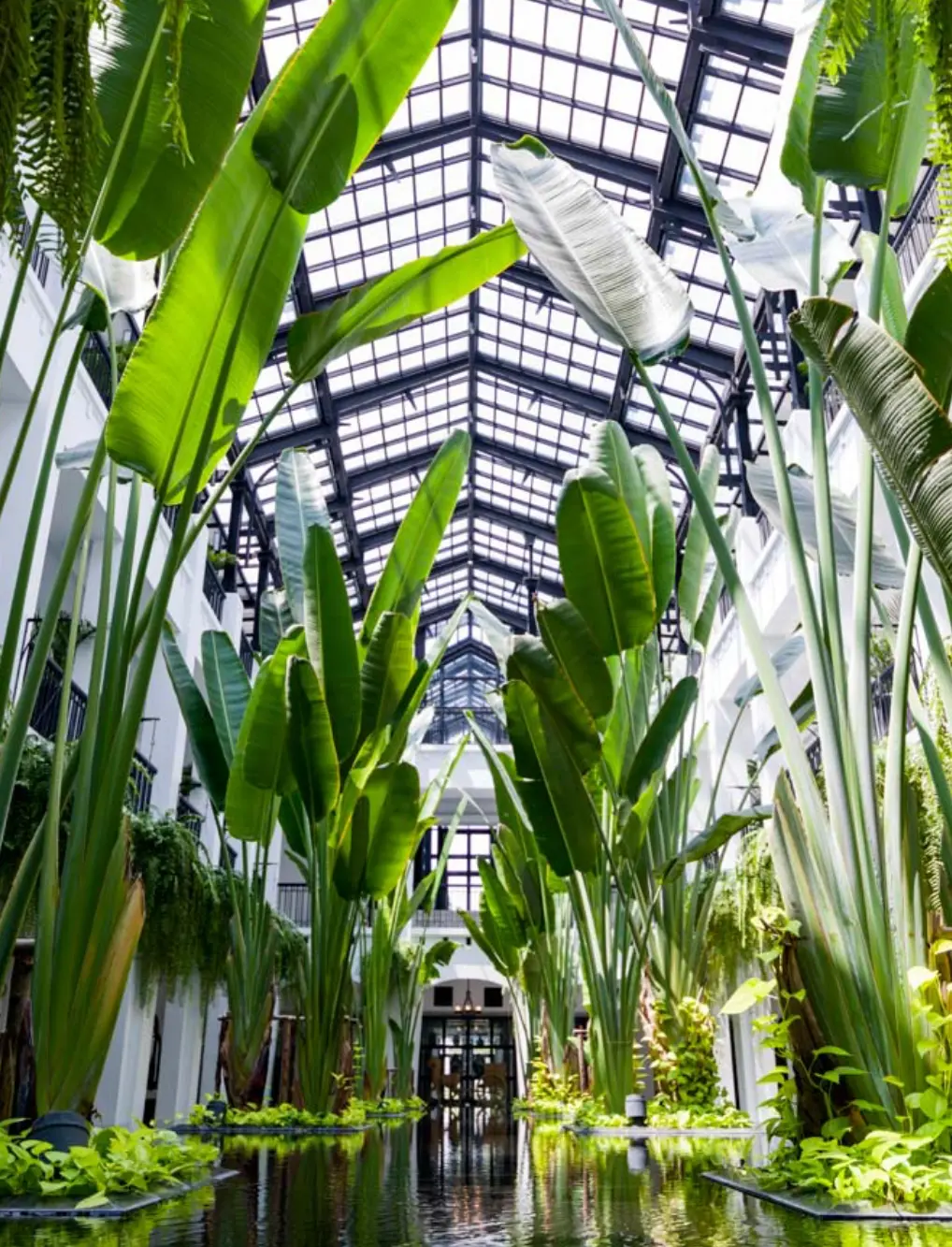
Siam Bangkok

The Siam, Bangkok

Bangkok is too much of everything and should be taken completely seriously. It has more Michelin-starred restaurants than most European capitals, a street food culture that is genuinely world-class, a contemporary art scene that has been building momentum for a decade, and a nightlife that — if that is what you’re after — will take your legs out from under you.

Wat Phra Kaew, the Temple of the Emerald Buddha within the Grand Palace compound, is Thailand’s most sacred site. The emerald Buddha is actually carved from jade, and it is dressed in seasonal robes — three sets, changed by the King himself three times a year — and sits in a glass case high above the altar in a temple of such overwhelming gilded complexity that it takes several minutes for your eyes to adjust. Wat Arun, the Temple of Dawn on the west bank of the Chao Phraya, is best appreciated from the opposite bank at sunset when the porcelain-encrusted towers catch the light and glow.

The food in Bangkok at every level: Gaggan and Le Du at the serious fine dining end, both consistently ranked among the best restaurants in Asia. The pad see ew from the cart that has been on the same corner of Silom Road for thirty years. The grilled seafood on Yaowarat Road in Chinatown at midnight. The boat noodles in the Arun Amarin market at 7am. All of it essential. None of it optional.

The Siam Hotel, built around a private collection of Siamese antiques by designer Bill Bensley, is the most characterful address in Bangkok — Art Deco on the Chao Phraya, a private pool, service of genuine warmth. Capella Bangkok on the opposite bank is the classically luxurious alternative with a river-facing infinity pool that earns its reputation at sunset.

THE ISLANDS

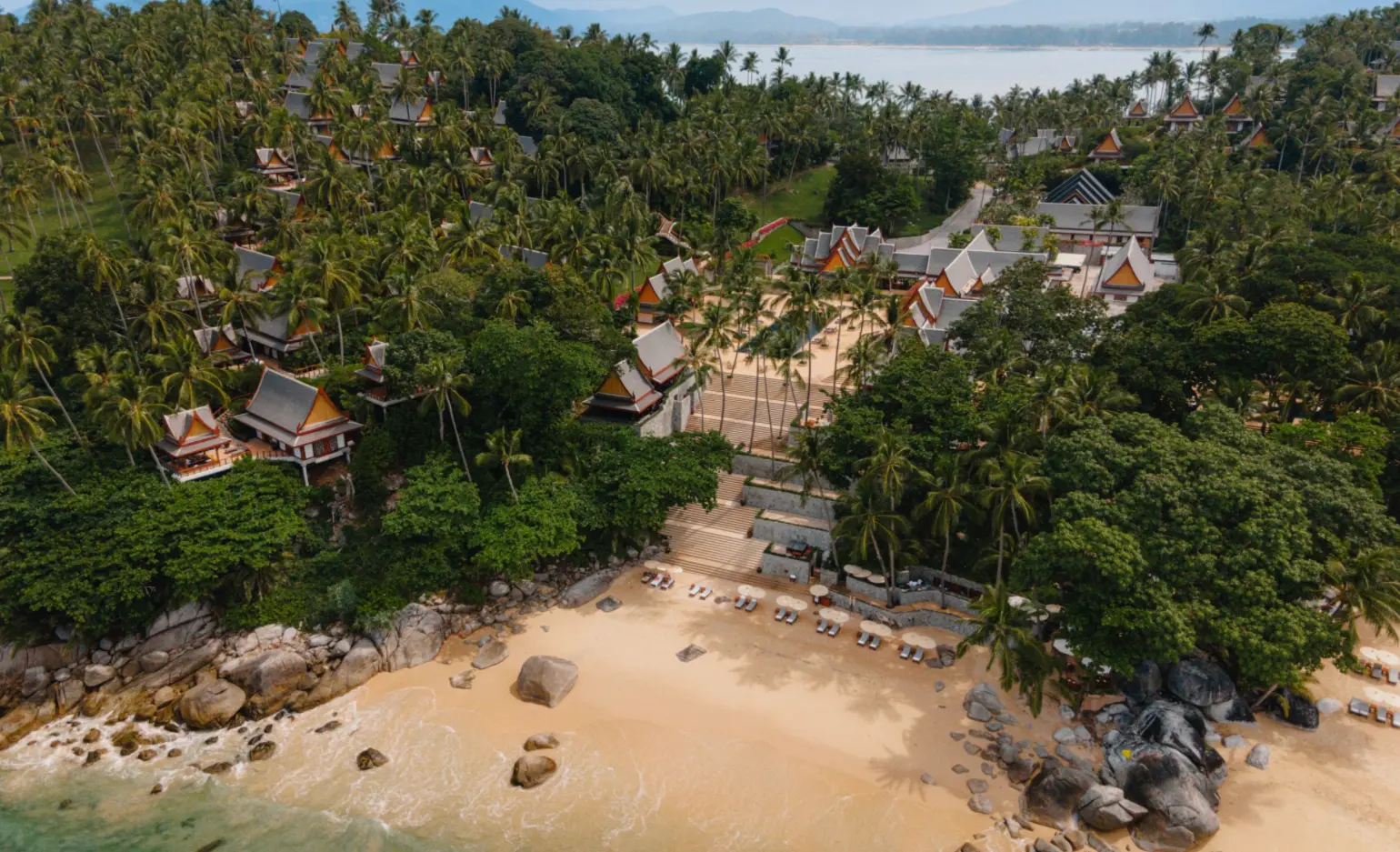
Amanpuri Phuket

Amanpuri, Phuket

Amanpuri in Phuket opened in 1988 and effectively invented what a luxury beach resort in Asia could be. Thai pavilion suites on the hillside above the Andaman Sea, teak and terracotta, a pool that disappears into the horizon. It has been imitated by every luxury beach hotel built in Southeast Asia in the 35 years since. None has quite matched it. Stay once and you will understand why.

For something more remote: Koh Lanta, where Pimalai Resort occupies a headland above a beach that remains genuinely uncrowded, is the answer. For something unusual: the Four Seasons Tented Camp at the Golden Triangle, where Thailand meets Myanmar and Laos, offers luxury tents in the northern jungle with the most thoughtfully run ethical elephant program in the country — no riding, no performance, just observation and care.