
Search icon
Adventure

Written by: The Va Beau Team July 6, 2026

Sri lanka the island that has everything

Sigiriya Rock Fortress image credit kelum-chathuranga placeholder

Sri Lanka is the island that keeps producing more than you came for. You arrive for the temples and find the food extraordinary. You arrive for the food and discover the highlands. You go to the highlands and the train journey alone is one of the great experiences of Asian travel. You come down from the highlands to the south coast for a beach day and a leopard walks across the road in front of your vehicle at dusk. You cannot plan for all of it because there is too much, and the correct response is to go twice.

The island is small enough — roughly the size of Ireland — that you can move between its very different landscapes in a few hours. Ancient ruins in the north and center. Tea plantations in the misty highlands. Colonial fort city in the southwest. Leopards and elephants in the national parks. A cuisine of coconut milk and chili and black pepper and tamarind that is almost entirely unknown outside the island and among the most interesting in Asia. All of this in one trip. All of this in two weeks if you plan it right.

THE TEMPLES

Sigiriya Rock Fortress image credit kelum-chathuranga
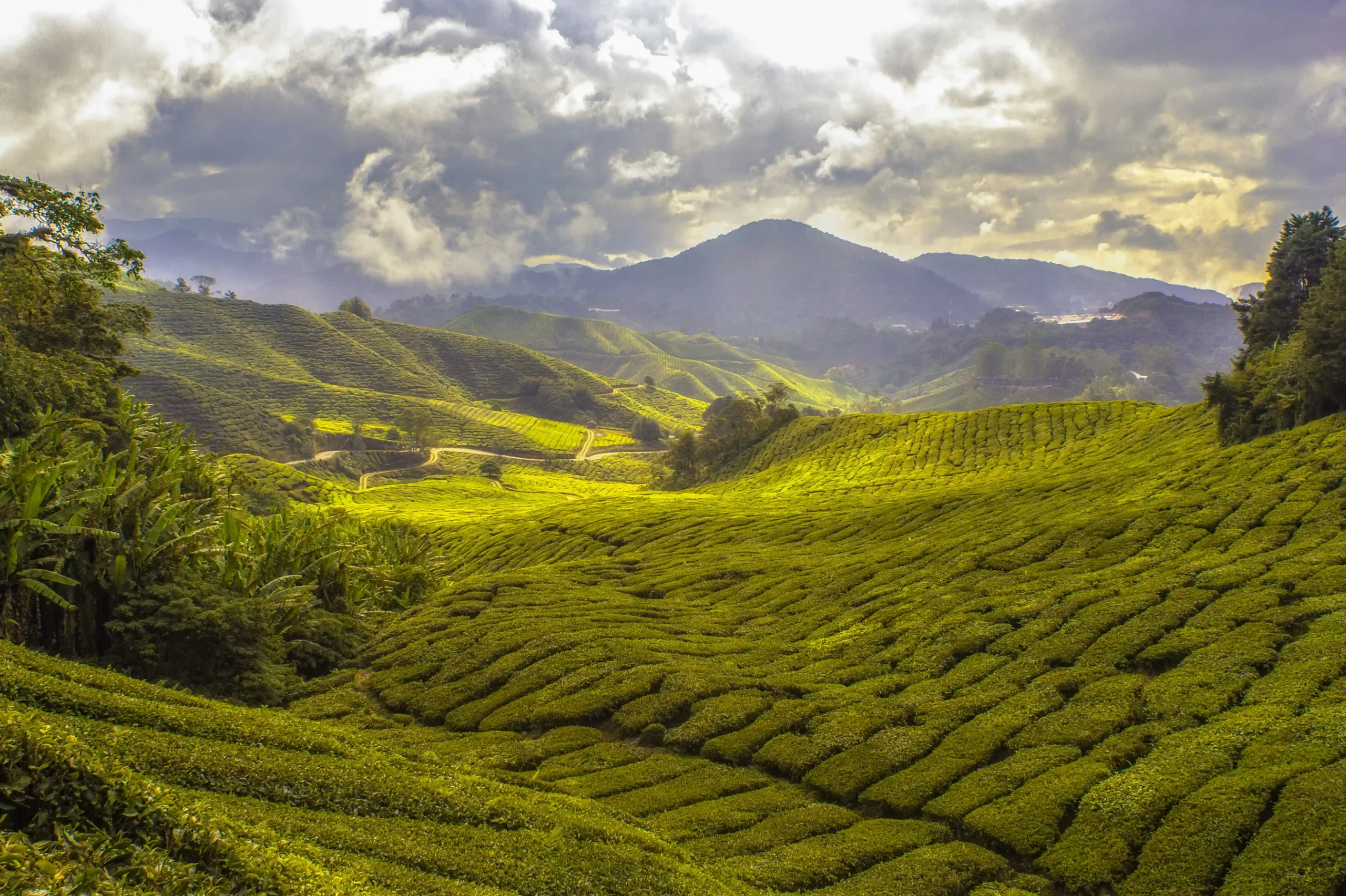
Ceylon Tea Trails - Image Credit paul Vincent

Ceylon Tea Trails highlands

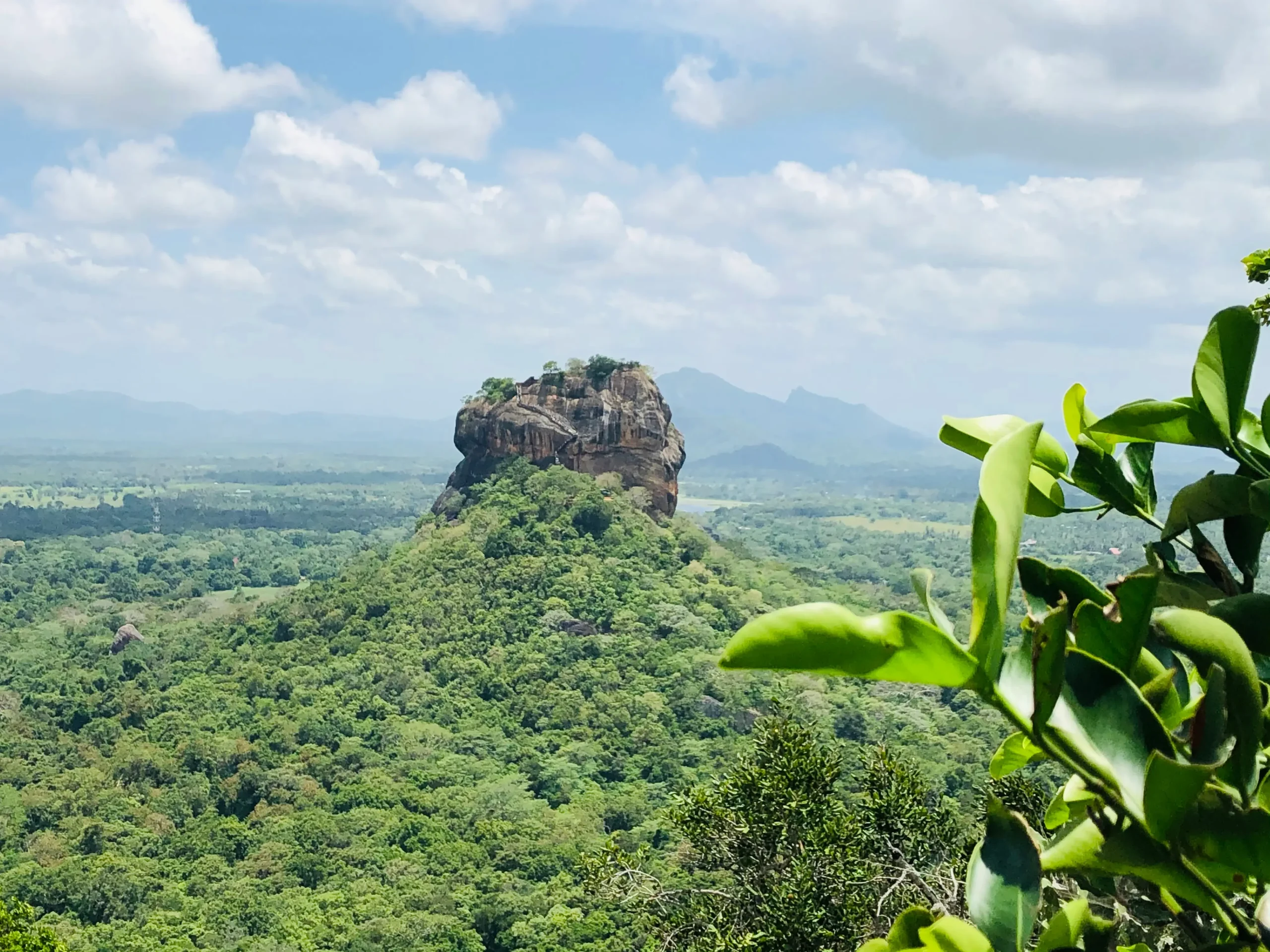
Sigiriya is a volcanic rock rising 180 meters sheer from the jungle plains of central Sri Lanka, near the town of Dambulla. In the 5th century, a king named Kashyapa built his palace on its summit — accessible only by a series of staircases carved into the rock face, past ancient frescoes of celestial women painted directly onto the cliff, through the massive carved stone lion’s paws that mark the final approach. The king was eventually killed in battle and the palace abandoned. Monks used the caves for centuries afterward. Today it is a UNESCO World Heritage Site.

You approach it across flat grassland, the rock rising impossibly above the tree line, and it takes your breath away in the most literal sense. The climb takes about an hour. The summit has views across the jungle in every direction. The frescoes, still vivid after 1,500 years, are the most extraordinary thing — faces of women with something in their expressions that seems entirely contemporary, painted by someone who was clearly a great artist and whose name we will never know.

Anuradhapura holds the Sri Maha Bodhi: a fig tree grown from a cutting of the original Bodhi tree under which the Buddha attained enlightenment in India in the 5th century BC. The cutting was brought to Sri Lanka in 288 BC. The tree has been continuously tended and continuously documented for over 2,300 years, making it the oldest documented tree planted by a human hand on earth. Pilgrims arrive every day. Some have been coming their entire lives.
THE HIGHLANDS

The train from Kandy to Ella is one of the most celebrated rail journeys in Asia and it earns that recognition without qualification. The line climbs from the city up into the tea-growing highlands, winding through plantation after plantation at a pace that allows you to see everything — the women picking tea on the hillsides, the mist moving through the valleys, the color of the tea plants, which is a specific shade of green that does not exist anywhere at lower altitudes. Get a window seat. Turn your phone off for a portion of it. Watch the landscape.

The Ceylon Tea Trails by Resplendent Ceylon are four restored British colonial bungalows on working tea estates in the Bogawantalawa highlands, connected by walking trails through the plantations. Each bungalow comes with a private chef and butler service. Tea is served at four o’clock overlooking the hills. Fires are lit in the sitting room when the evening cools, which it does, at this altitude, even in summer. It is one of the most genuinely distinctive stays in Asia.

THE FORT

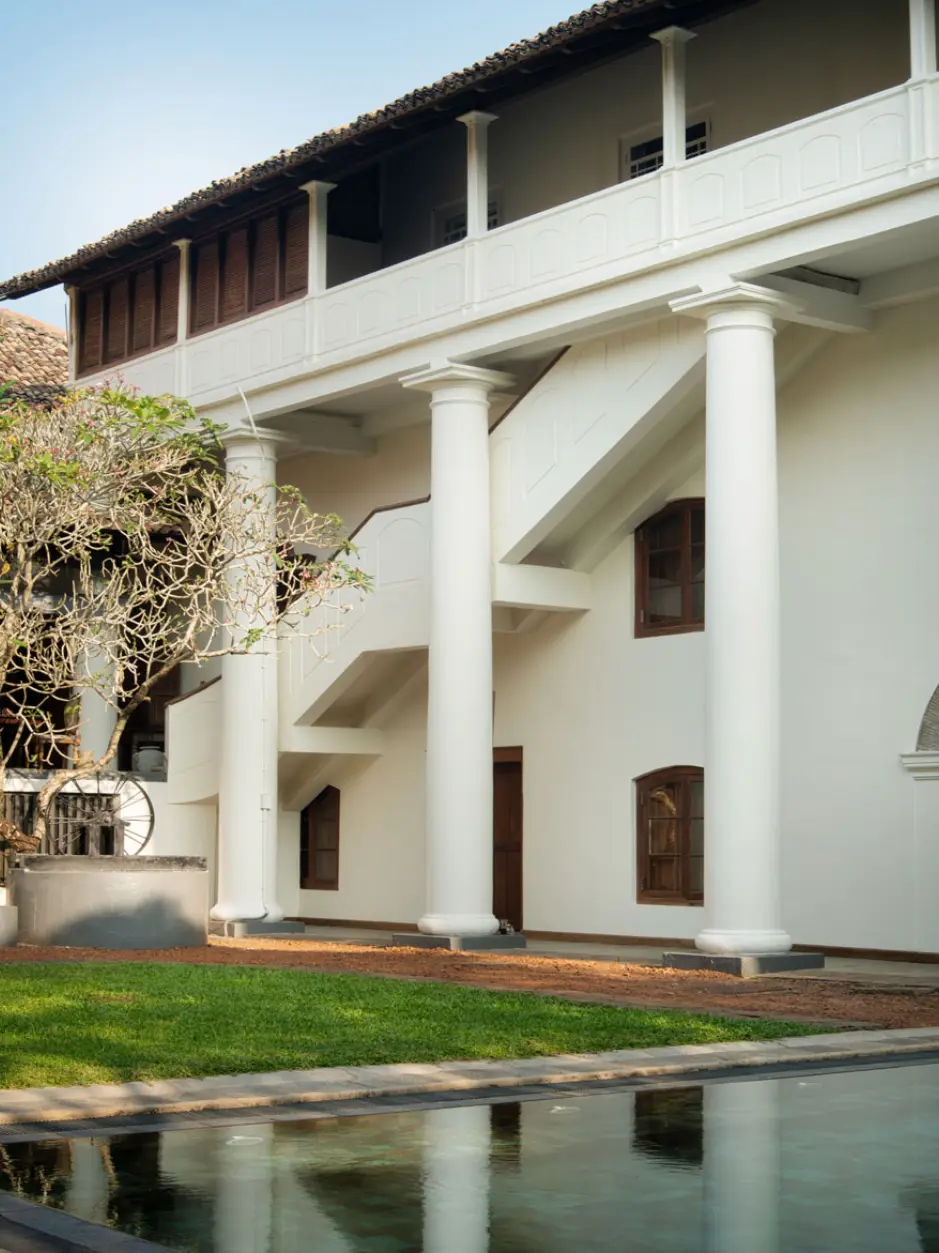
Galle Fort hotel

Galle Fort, Sri Lanka

Galle Fort is a Dutch colonial fortification on a peninsula on the southwest coast, built in the 17th century and still structurally intact — the old bastions, the lighthouse, the cobbled streets inside, the 300-year-old buildings now housing boutique hotels and galleries and restaurants. It has been a UNESCO World Heritage Site since 1988 and it functions simultaneously as a tourist destination and a living neighborhood where people actually live, which is the combination that makes it worth spending several days.

Amangalla, in a building that has been receiving guests since 1684, is the grandest address inside the walls. Cape Weligama, twenty minutes east of Galle on a clifftop above a crescent bay, offers infinity pools over the Indian Ocean and a scale of luxury that the Fort itself cannot match.

THE WILDLIFE

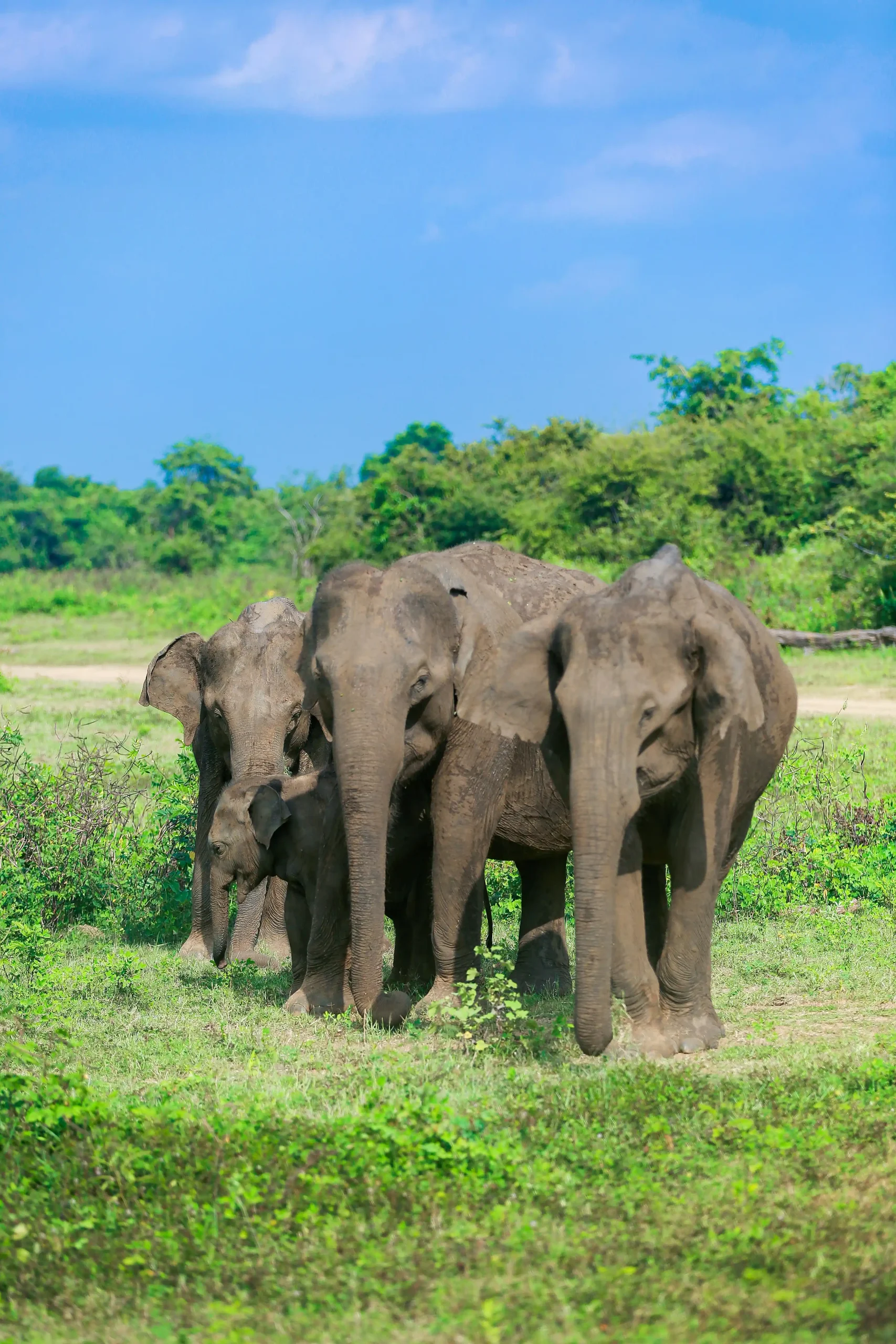
Elephant herd at Udawalawe - Image credit - shyaman-prasad

Udawalawe National Park, Sri Lanka

Udawalawe National Park is the place in Asia to see elephants in genuinely wild conditions. Large family herds with calves, moving through open grassland at their own pace, completely unencumbered by fences or management — the freedom and ease of the animals is what makes the experience qualitatively different from any elephant encounter in a managed setting. The park was created when the Udawalawe reservoir was built in the 1960s and displaced the local elephant population into the surrounding forest, which the park was then established to protect. It worked.

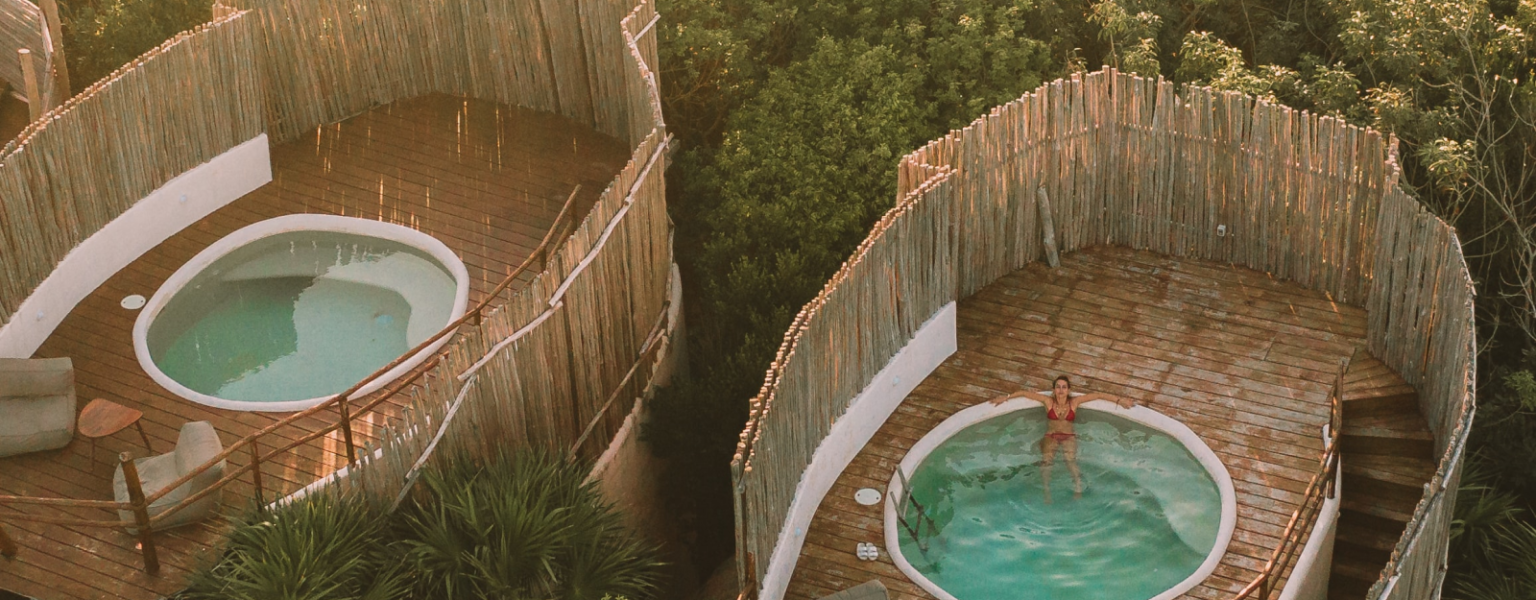
Yala National Park, on the south coast, has one of the highest documented leopard densities anywhere on earth. The leopards here are habituated to vehicles and can be observed at close range doing what leopards do — hunting, sleeping in trees, carrying prey up into the branches. Wild Coast Tented Lodge, where the Yala buffer zone meets the Indian Ocean, places you inside this landscape rather than adjacent to it. The cocoon-shaped tents, the beach a short walk away, the sounds of the park at night through the canvas walls — it is the right way to do Yala.

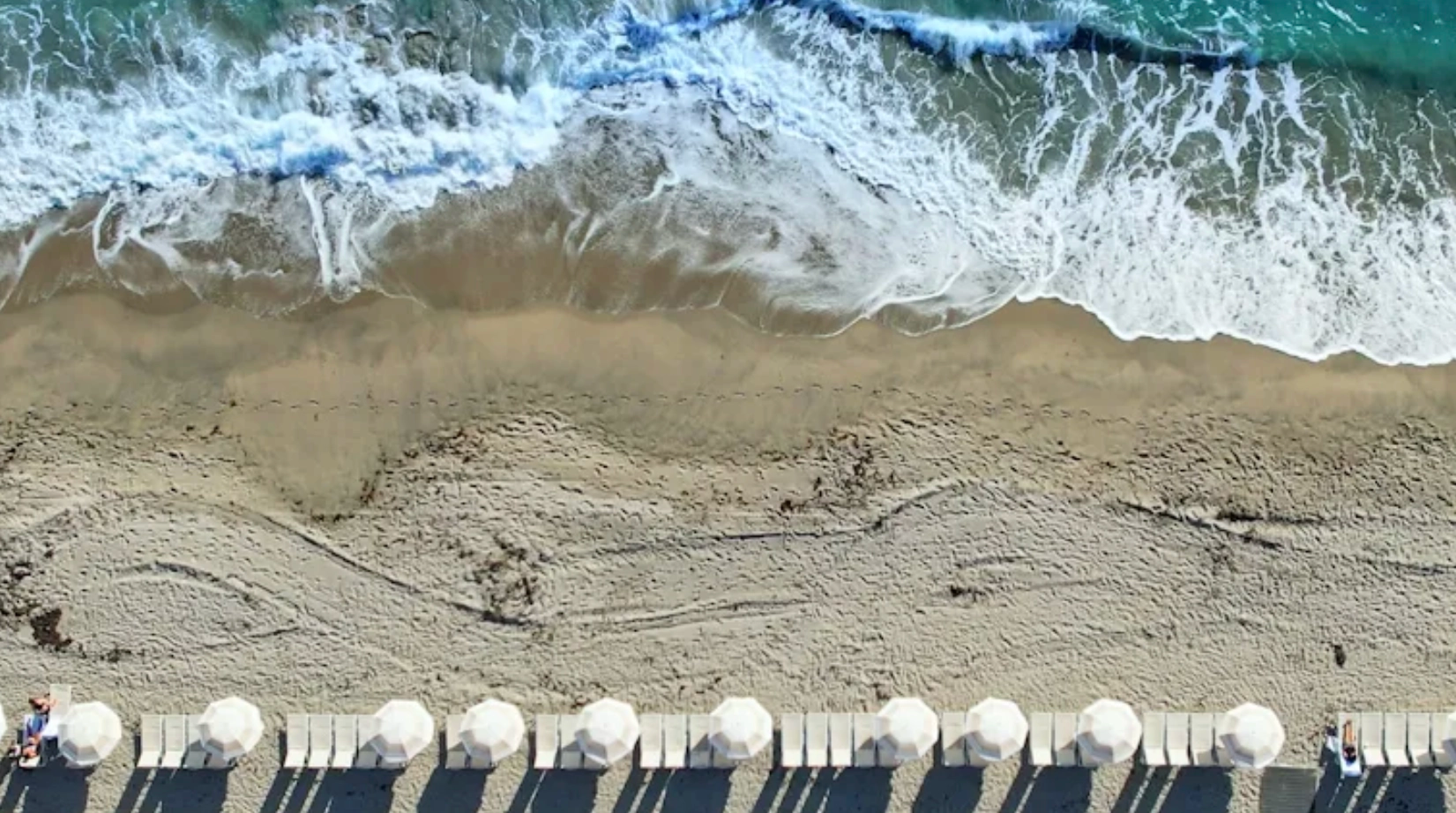
An hour west of Yala, the south coast turns into something else entirely. Hiriketiya is a horseshoe bay near Dikwella — palm trees, jungle right down to the sand, turquoise water held in by the curve of the bay. It was a quiet surf town until recently and the word is now very much out, but it hasn’t been ruined yet. Two surf breaks, good food, yoga, boutique stays in the trees. Give it two or three days on the way between Galle and Yala. You will want to stay longer.